THE SECRET STASH OF OIL

lamplight2“And the foolish said to the wise, “Give us some of your oil, for our lamps are going out.’  But the wise answered, saying, “No, lest there should not be enough for us and you; but go rather to those who sell, and buy for yourselves.’ And while they went to buy, the bridegroom came, and those who were ready went in with him to the wedding; and the door was shut. Afterward the other virgins came also, saying, “Lord, Lord, open to us!’ But he answered and said, “Assuredly, I say to you, I do not know you.’ Watch therefore, for you know neither the day nor the hour in which the Son of Man is coming.” (Matt. 25:7-13NKJV).

This parable is an earthly story with a heavenly meaning. The Kingdom of God is like these ten virgins. The virgins would seem to be symbolic of people who say they are Christians. They all appear to be believers. But they are not. In the Age to come, only the righteous and holy people will live together. Jesus said that in his day and ours it is like coexistence between weeds and wheat, good and bad, and of course, the wise and foolish (Matt. 13; Mark 4).

The Lord’s verdict is that five were sensible enough to have that secret stash of oil and five were foolish for not bringing it. The parable goes on to show the bridegroom delayed in his coming. The hour became late and there was no specific time given for the bridegrooms coming so they nodded off and went to sleep. There is some spiritual blackout approaching before Christ’s coming and if there are no batteries for your spiritual flash light you will be in the dark forever.

Oil is an accepted symbol of the Holy Spirit and the oil mentioned here in this passage has to do with the work of the Spirit of grace in our hearts. The Holy Spirit wants to teach us about Christ, “But when the Comforter is come, whom I will send unto you from the Father, even the Spirit of truth, which proceedeth from the Father, he shall bear witness of me.” (John 15:26RV).  He gives us illumination and understanding about Jesus.

The Holy Spirit also wants to help us in our devotion and dedication to Christ, “For it is God which worketh in you both to will and to do of his good pleasure.” (Phil 2:13). In another version it says, “It is God who produces in you the desires and actions that please him.” (GW). The grace of God is the secret stash of the oil grace that will burn with knowing and loving Christ that gives us the illumination and dedication to Christ we need.

There are two instances in the gospel that shed light on this passage. On the mount of transfiguration when Jesus brings his disciples up to pray, the disciples slept: “But Peter and they that were with Him were heavy with sleep and when they were awake they saw his glory…” (Luke 9:32). When Christ unveiled his glory instead of praying they experienced blackout. Like oil in the lamp that fuels its flame so that it lights up the room, Christ wants to illuminate our hearts by his Holy Spirit teaching us about him. The light of Christ enlightened our hearts when we first became Christians (Heb 10:32). This is called illumination or the time “God’s light shone on us” (GNB).

But in the time of illumination or the time Christ would have given them understanding they experienced blackout!

Again, in the garden of Gethsemane, while Christ was agonizing in prayer, they could have demonstrated their dedication to him. Instead he found his disciples, “…sleeping for sorrow, and said unto them, “Why sleep ye? Rise and pray lest ye enter into temptation.’” (Lu. 22:45-46). What is interesting is that the name Gethsemane means “oil press” and can relate to the beaten green oil used for the golden candlestick of the Old Testament tabernacle. Jesus prayed and profusely sweat great drops of blood (Luke 22:44) and he wrestled with drinking the cup of God’s wrath against sinners on our behalf. He would say, “Not my will but thine be done” (Luke 22:42). The oil of devotion was pressed out of the Son of God who learned, “obedience by the things which he suffered (Heb 5:8). It was the same for the disciples, when the oil of devotion should have been pressed out or created in their hearts they slept. In the time of devotion and obedience they blacked out.

The disciples were blacked out in sin. They had to be saved by grace (Eph 2:8-9). Sleep on take your rest Jesus told them (Mk 14:41). Jesus would have to sleep for them three days in the tomb (1 Cor. 15:1-3). Jesus turned them back to himself (Luke 22: 31-32). That is the oil of God’s grace. Sleeping means they were out of the picture. They could not manufacture oil or save themselves. Like Adam (Gen 2:21-22) and Abraham (Gen 15:12). God was doing a work of grace they had no part in (Eph 2:8-9). Only Christ could give them the oil they needed. We know that Christ’s everlasting love has softened our hearts in his Sovereign grace, “Awake thou that sleepest, and arise from the dead, and Christ shall give thee light’ (see Eph. 5:14).

They all were startled awake as they heard the cry, “Behold the bridegroom approaches go out to meet him!”  Now, the only time that remained at this point was to ignite their lamps. There are people very proud of their lamps. They have the “sinner’s or salvation prayer” lamp or the water baptism lamp, church attendance lamp, the ministry lamp but no oil of grace in their spiritual inventory. I want to tell you that they loved their lamps of self-righteousness more than the oil of knowing and loving Jesus Christ! That is clear from this parable. There is no difference between the ten virgins until that fateful moment when we see five ladies holding radiant torches and the others staring at their smoldering lamps.

These types of weddings commonly took hours and this presented the possibility for their lamps to burn out so the sensible girls brought extra oil. The thing that is most surprising is that since most of the weddings of that culture took place at night, it would seem just plain common sense to bring oil with them, thus their folly and stupidity is seen. Something so important, a fact of such common knowledge is overlooked.  Jesus taught, “You also must be ready all the time for the Son of Man will come when least expected.” (Mt. 24:44).  

The five simple ladies were excited at first, but their enthusiasm sprung a leak.  As far as they were concerned, the party is over before it has begun.

They look at the other ladies igniting their torches, chattering with excitement, their hearts glowing with an amber flame like their faces. The silly ladies cry, “Give us some of your oil, we have run out!”  The response of the wise virgins was, “We only have enough for our lamps. You are going to have to buy oil of them that sell!”

We must remember that the oil was something that the sensible virgins could not give to the foolish virgins.  We cannot give the oil to others; they must buy it for themselves. This means a denomination or organization cannot dispense oil.  You cannot rely on a refueling with oil from your pastor or church.  Children who have Christian parents cannot siphon their parents oil tanks for a ride into heaven, nor can a wife borrow oil from her husband or a husband from his wife. They were asking the wrong people at the wrong time for oil. It is Christ and only Christ that can pour the extra oil of his spirit into our hearts. No one can give you what he can.

What a lesson for us- we should be found greeting Him at the door upon His arrival, not shopping for oil in the middle of the night.  Love and devotion cannot be bought. Anyone who waits this long does not love and know Jesus they only like his parties. The sensible virgins watched the foolish go out to buy oil at midnight and of course, there are no shops open. They slept through business hours. Our Father’s business of salvation will close its doors one day. There is coming an hour where no matter how genuine the repentance God will not honor anyone’s requests due to their procrastination. “Seek ye the Lord while He may be found, call ye upon Him while He is near” (Isa. 55:6). You and I are on God’s schedule, not He on ours.

The bridegroom comes while they were away and the door of “opportunity” is permanently shut with a sickening clap. It was customary for the owner of the house where a wedding was taking place, after all the invited guests were checked in, to close the door, not allowing a soul to enter no matter how persistent they were in their pleas. This prevented the curious and unwelcome guests from access to the reception. The door we speak of is the entrance to God’s kingdom (Lu. 13:28). It will be like the constant ringing of a phone, and no answer. It will be like a running to a gate at the airport, to find you have missed your flight and all flights to that place have been cancelled indefinitely. It will be knocking on a door that refuses to open. The Bridegroom will eventually separate those who know him from those who do not. Christianity cannot be casually browsed through, you cannot come late! What a warning for those who have lamps but no oil. Like Augustine said, “God promises forgiveness for repentance but what promise does God give for our procrastination?” There is coming a time when God cannot be reached and therefore be ready at all times.

The foolish virgins can hear the laughter and music of the wedding reception and their hearts see a closed door. They are missing the wedding. They panic and bang and bang on the locked door until a response is given.

If we add the commentary of Luke chapter thirteen, they begin to panic and cry, “Lord, Lord, open to us!”

There is a muffled voice behind the door, “Sorry, you’re not on my guest list…I do not know you!” 

They say, “But we’ve known you all our lives!’

He interrupts, “Your kind of knowing can hardly be called knowing. You don’t know the first thing about me.” (see Luke 13:25-27Message).

No excuses, apologies, or explanations are accepted. Why? This is the heart of the matter: they are strangers to him. He does not have a close relationship to them. They do not burn with the secret stash of oil that shows they know and love Christ.  Jesus affirmed this declaring, “I know mine own and mine know me” (John 10:14). Salvation is God knowing us. God is omniscient he knows everything but this is a different knowledge. It is saving knowledge. Paul said, “But now after that ye have known God, or rather are known of God…” (Galatians 4:9). It is a privilege for a person to have God reveal Himself to them. It is an honor for us to love him who loved us so much. We would do well to put salvation in those terms.

As for the foolish virgins of today, they have been duped by the worst kind of lie, self-deception, and they do not know the bridegroom. They only look like virgins and have a lamp, but they have no oil. There are many who profess to belong to Christ and even claim to know and love Him, but they only have a façade of religiosity, just an empty lamp with no light, with no evidence of “the power of God unto salvation…” (Romans 1:16). This is a terrifying prospect for silly neglectful church goers. They do not care until it is too late. Their “break glass in case of emergency” relationship with God will not help them. The Lord’s delay serves as an opportunity for these hypocrites to sin. They do not see it as the Lord’s longsuffering (2 Pet. 3:8-10) and giving them opportunity to repent (Rev. 2:21) but they think the Lord is neglectful and careless about his promises. Jesus warned, that day would be, “like a trap. That day will surprise everyone on earth.” (Luke 21:35CEV).  They will be caught and trapped by their own hardness of heart.

As for the elect wise virgins, they went with him into the marriage! This passage is an encouragement because God is our Savior. Heaven is where Jesus is. That is why the wise virgins want to go to heaven. It is not heaven unless Jesus is there. We are saved and supported by the secret supply of his grace in the most difficult of times. His mercy and kindness is extended to all who will prepare to meet with Him. They are promised that their “bottle of oil shall not fail” (1 Kings 17:14). They are vessels of His mercy and He who is the author and finisher of their faith oversees their salvation.

Thomas Brooks the great puritan writer wrote about this and said, “Oh, God forbid that my heart should be affected or taken with anything in comparison with Christ. The more I know Him, the more I love Him; the more I know Him, the more I desire Him; the more I know Him, the more my heart is knit unto Him. His beauty is captivating. His love is ravishing, His goodness is attracting, His manifestations are enticing, His person is enamoring, His lovely looks please me! His pleasant voice delights me, His precious Spirit comforts me, His holy word rules me! All these things make Christ to be a heaven unto me!

God IS God

god-creates“In the beginning God created the heavens and the earth.” is the most radical statement ever made. Clearly it means there is a God. God confronts face to face, challenges, dares and threatens people with his existence. Even more drastic, it means that you and I cannot escape God. “You are all around me-in front of me and in back of me. You lay your hand on me.” (Psalm 139:5GW). If you don’t want him around-he’s there anyway. If you want him around he’s not going anywhere. He is always there and always will be there for all our lives and when we are dead and gone. God will always be God. You are eventually going to have to confront the whole “God” issue, now or later.
 

Genesis teaches that it’s all about God. Is your life really theocentric-centered around God? Is it Christocentric or Christ centered? Or are you serving God for all the benefits that come with being a “Christian?” What is the message that we are giving the world? Do you trust God enough to serve him no matter what trials come or do you exchange him at a religious store for another kind of God? Life cannot be life; love cannot be love without God and his only begotten Son Jesus Christ.


John Piper says, “The crucial question for our generation-and for every generation-is this: If you could have heaven, with no sickness, and with all the friends you have ever had on earth, and all the food you ever liked and all the leisure activities you have ever enjoyed and the all the natural beauties you ever saw, all the physical pleasures you have ever tasted and no human conflict or any natural disasters could you be satisfied with heaven if Christ were not there?”[i]


[i] John Piper, God is the Gospel, from the chap. What the World Needs Most-the Gospel’s Greatest Gift, God. pg 15 © Desiring God Foundation. Published by Crossway Books Wheaton, Illinois.

Unity Through Truth

rated-rWhat is a creed? It is a testimony of the faith in God and the scriptures that defines “those things which are most surely believed among us.” as Christians. (Luke 1:1). It is simply says, “We believe” or, “I believe.” The Scriptures of the Old and New Testament are the Word of God and are the all-sufficient rule of faith and practice (2 Tim 3:16-17; 2 Peter 1:20-21). It is the only criterion of doctrine that has any power to insist people to believe and obey what it teaches. All other standards that a person subscribes to are of value or authority only as they teach what the Scriptures teach.


R.C. Sproul said that “creeds are distinguished from the Scripture in that Scripture is norma normans (“the rule that rules”) while the creeds are norma normata (“a rule that is ruled”).[i]  The wonderfully practical thing about creeds is that they summarize and give clarity to what we believe as Christians and they are important for the harmony of God’s people because they help us to unite around important issues. It is hard to have unity with others when you do not know what they believe. Creeds were intended to bring unity not division despite the fact that creedally challenged people today seem to think that they are divisive.  But men who made creeds and confessions studied the scriptures and considered it their duty to intellectually and logically construct a system of faith out of the materials presented in scriptures. When you can be specific and clear on what you and the church believe, unity becomes more cherished and unity must be based on truth, not the lowest common denominator. 


How can you fellowship with someone when you do not know what they believe? How can you ignore the teachings of the scripture for the sake of unity? Today the great sickness in the thought process of people is pluralism-the belief that all religious paths lead to acceptance with God. This is anti-Christ thinking and will only lead to religious slavery and eventually societal breakdown. Unity today is at best the setting aside of your beliefs for the “greater good” of soceity. But the Bible makes it clear that Jesus Christ and Christianity are the true religion and this cannot be compromised.


Many ministers egotistically teach that we have no creed but Christ. But the Bible asks, “What? Came the word of God out from you? Or came it unto you only?” (1 Cor 14:34). The men of God who hammered out and forged the creeds of the church should not be ignored or set aside by those who question their teaching just because it is seen in a creed. This erroneous attitude of non-creedalists is nothing new. It goes back to the time where the church in Corinth was having terrible disunity, “Now this I say, that every one of you saith, I am of Paul; and I of Apollos; and I of Cephas; and I of Christ.” (1 Cor. 1:12). I that group who do you think was the most problematic? Was it Paul’s group? Was it Peter’s denomination? I think not. It was that elitist congregation those who claimed that they exclusively belonged to Christ above their brethren that were the most dangerous.


I read somewhere that the real question is not about accepting the word of God over the creeds of men or placing the Creeds above the holy Scriptures but the issue is the tried and tested faith of the collective body of God’s people, versus the private opinion of the person or groups who object to creeds to make up or reinvent the church and their own beliefs. Creeds are an expression of beliefs that line up with scripture (orthodoxy) and are detailed in their phraseology to avoid beliefs that deviate from scripture (heresy).


The Article Seven of the Belgic Confession states this adamantly concerning scriptures and any other human writing, “For since it is forbidden to add to or subtract from the Word of God, this plainly demonstrates that the teaching is perfect and complete in all respects. Therefore we must not consider human writings– no matter how holy their authors may have been– equal to the divine writings; nor may we put custom, nor the majority, nor age, nor the passage of time or persons, nor councils, decrees, or official decisions above the truth of God, for truth is above everything else.


Creeds demonstrated how the church developed and became more sophisticated in their interpreting Scripture. It also serves to help discern pure doctrine and defend it from the distortion of heretics and the assault of unbelievers, and creates a unity of faith through teaching.  They also give us a syllabus in training our children and other Christians. They should manifest a convincing competent knowledge of the fundamental teachings of the Christian faith and live a life that glorifies and serves God.


Many people will say that they do not agree with the Greek and Roman forms of the church and that is why they do not accept Creeds. That is why we must test the Creeds in light of the scripture. I think the Second Helvetic Confession says it beautifully, “Wherefore we do not despise the interpretations of the holy Greek and Latin fathers, nor reject their disputations and treatises concerning sacred matters as far as they agree with the Scriptures; but we modestly dissent from them when they are found to set down things differing from, or altogether contrary to, the Scriptures. Neither do we think that we do them any wrong in this matter; seeing that they all, with one consent, will not have their writings equated with the canonical Scriptures, but command us to prove how far they agree or disagree with them, and to accept what is in agreement and to reject what is in disagreement.”


[i]Norma Normata A Rule that is Ruled Right Now Counts Forever By R.C. Sproul © 2008 Tabletalk Magazine

They Live What They Preach

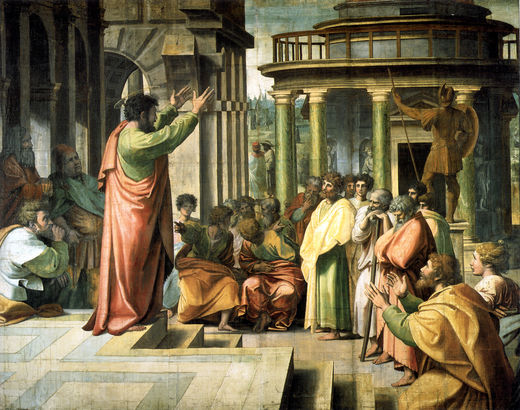
saint-paul-preaching-in-athens-3511-midIn a fellowship I attend called The Young Lions of the Reformation,  one of the brother’s named Joe brought up a name that is not familiar to many Christians today, a man named Aristedes.

It is a part of a defense of  Christians and Christianity from Marcianus Aristedes the Philosopher of Athens written around 125 A.D.  to Caesar Titus Hadrianus Antoninus.

During of time of the unjust persecution it is a powerful testimony of the lives of Christians who obeyed the Word.  He desired those that accused the Christians falsely that accused the Christians to be silent and let the Christians speak the truth and worship the one true God, Jesus the Messiah who was going to bring awful judgment upon the human race. He said says concerning their beliefs, prayers and worship,  ”Whatever is spoken in the mouth of the Christians is of God; and their doctrine is the gateway of light..and to me there is no doubt but that the earth abides through the supplication of the Christians…and assuredly the race of the Christians is more blessed than all the men who are upon the face of the earth and verily, this is a new people, and there is something divine… in the midst of them.”

Why does he says these things with such confidence?

He states to Caesar: “Wherefore they do not commit adultery nor fornication, nor bear false witness, nor embezzle what is held in pledge, nor covet what is not theirs. They honour father and mother, and show kindness to those near to them; and whenever they are judges, they judge uprightly…Falsehood is not found among them; and they love one another, and from widows they do not turn away their esteem; and they deliver the orphan from him who treats him harshly. And he, who has, gives to him who has not, without boasting. And when they see a stranger, they take him in to their homes and rejoice over him as a very brother; for they do not call them brethren after the flesh, but brethren after the spirit and in God… And if they hear that one of their number is imprisoned or afflicted on account of the name of their Messiah, all of them anxiously minister to his necessity, and if it is possible to redeem him they set him free. And if there is among them any that is poor and needy, and if they have no spare food, they fast two or three days in order to supply to the needy their lack of food. They observe the precepts of their Messiah with much care, living justly and soberly as the Lord their God commanded them.”

…Such, O King, is the commandment of the law of the Christians, and such is their manner of life. As men who know God, they ask from Him petitions which are fitting for Him to grant and for them to receive. And thus they employ their whole lifetime. And since they know the loving-kindnesses of God toward them, behold! for their sake the glorious things which are in the world flow forth to view. And verily, they are those who found the truth when they went about and made search for it; and from what we considered, we learned that they alone come near to a knowledge of the truth. And they do not proclaim in the ears of the multitude the kind deeds they do, but are careful that no one should notice them; and they conceal their giving just as he who finds a treasure and conceals it… Now the Greeks, O King, as they follow base practises in intercourse with males, and a mother and a sister and a daughter, impute their monstrous impurity in turn to the Christians. But the Christians are just and good, and the truth is set before their eyes, and their spirit is long-suffering; and, therefore, though they know the error of these (the Greeks), and are persecuted by them, they bear and endure it; and for the most part they have compassion on them, as men who are destitute of knowledge.

J.G. pointed out that Aristedes made clear that such “is the commandment of the law of the Christians, and such is their manner of life.”  Not only were their beliefs correct but they lived what they preached. It is wonderful testimony of the grace of God that this man places before Caesar. May it be what people can say of us in this day of hypocrisy and double standards.

Translation of the apology of Aristedes was done by D.M. Kay B.Sc., B.D., assistant to the professor of the semitic langauges of the university of Edinburgh.

Tales From the Furnace Part 1

furnace“Beloved, think it not strange concerning the fiery trial which is to try you, as though some strange thing happened unto you. But rejoice, inasmuch as ye are partakers of Christ’s sufferings; that, when his glory shall be revealed, ye may be glad also with exceeding joy…for the spirit of glory and of God resteth upon you.” (1 Peter 4:12-14).


We are saved by God’s sovereign grace alone, through faith alone by Christ alone for God’s glory alone. But we will go through a process of sanctification and be comformed to his image. What I am attempting to say is not email, voice mail or snail mail it is heart mail. I only know that in order to change and change I must, that the furnace can not be side stepped. Only when you grow sick and tired of your self and you will, then you of your own free will enter the furnace. You will cry for purging of your sin nature rather than pardon for your sins. The children of Israel were told, “But the LORD hath taken you, and brought you forth out of the iron furnace, even out of Egypt, to be unto him a people of inheritance, as ye are this day. (Deut 4:20).


Those are ominous words at first reading. Peter tells those persecuted Christians thousands of years ago that trials are fiery. This verse can say easily, “Don’t be amazed by the burning!”  I am amazed that this could happen to me. My present suffering is agony on fire and a trial by fire. It burns. It injures. It hurts so badly. My tears are like the crackling of the flames. When I am dumb with silence I just feel the steady heat, I have a steady glow as all the moisture in me is turned into a drought (Psalm 32:4). I am dehydrated. I thirst! My soul is a dry and thirsty land where there is no water and I thirst for God (Psalm 63:1-3)! Of course it burns, scorching fire is involved. If by chance you hear or read these words and you are experiencing pain, you are not unspiritual, it does not mean you are carnal because you are in pain.


There is dignity in this time even when you feel all your self-respect has been stripped away. People will accuse you or worse counsel you during this time. This is a matter of intimacy. Man’s opinion or man pleasing is the heart of all lethal religion. Of the Pharisees who refused the fire of Christ’s words it says, “All their works they do for to be seen of men!” (Mt. 23:5). Do you and I feel absolved from this sort of criminal act? The Message version says, “Their lives are perpetual fashion shows, embroidered prayer shawls one day and flowery prayers the next.” Man’s opinion of you must become fuel for the furnace or you will never benefit from this trial. You will be useless for the Master’s work. When you come to the realization of how many things you have done to be seen of men instead of God, it will break your heart!


You and I feel disfigured on the way to be transfigured. What you were, what you know does not matter at all in these flames. Self esteem and confidence-what are they in this furnace that incinerates all things?


A healthy view of self is not against scripture and impish false humility is loathsome to God but self hatred has its place as well. But everything is an issue to the flames including your identity and titles. Your history and good works are but dung if you would win Christ! (Phil 3:8). Nothing can douse the inferno. Man centered theology cannot help you. Don’t speak to me of psychology. Leave me and my Beloved alone. You cannot know. Only he can. What you and I know about God is tested and if it is worthless it is reduced to ashes as the fire licks at our mind and soul and removes it to where we have more questions than answers! 


If you are suffering, you are suffering like Christ did. To be like Jesus is the prayer of any child of God who has a sane understanding of what it is to be a Christian. I am stunned as I read that people “did not accept deliverance that they might obtain a better resurrection!” (Heb 11:35). What kind of mindset is that compared to what we hear preached in the pop theology of the emergent, church growth cults of today?


But could you look at him in the face, touch his nail scarred hands, the wound that was from a lance thrust in his side and look down art his nail pierced feet never having endured suffering and trial? Is Jesus in his suffering so disfigured in your eyes that you do not see the beauty he has? Paul prayed for “the power of his resurrection and the fellowship of his sufferings!” (Phil 3:10). The Murdock translation says, “That I might know Jesus, and the efficacy of his resurrection; and might participate in his sufferings, and be assimilated to his death.” The effectiveness of his resurrection life can only be appreciated when you are personally involved with a suffering for Christ and are absorbed into his death! Is this suffering Jesus someone you avoid? It is a fellowship and companionship. Those who associate with him do suffer. But we suffer with him that we might reign with him. (2 Tim 3:12).


As hard as it is to accept, a radiance and splendor of his presence is going to be seen in you like never before. You are being integrated into all that Jesus is, in this furnace. The spirit of glory and of God will rest on you.


This trial is familiar yet unique. It is a test. Why now? Either things were going so well, or things are bad enough! Now a test comes! It is not a pop quiz, it is like a pop SAT. Trials are not strange. It is not an accident. This is not THE trial with no obstacles afterward. There are many ordeals in this life (James 1:2-3). God says “Don’t be confused. It is on purpose. You must be tested and proven.”  God is not after you he is after something in you. Like a dangerous glaucoma of pride, or the cancer of bitterness, any soul damning desires that lurk like a cancer that pretends to be benign when it actually can turn terminal in an instant.


But no matter despite what Peter our brother in Christ wrote to us, my first reaction to life’s complications is that they are strange and I am confused. I have been here before but it is a different scene.

DID GOD KILL ADAM?

expulsion1Hamartiology is a theological term that refers to  the study of sin.  Yes, I said the word sin and the word theology. This article will be heavy theology to some by wade through the waters if you can. I am just a student attempting to learn more about our Lord. 

Sin means to miss the mark of God’s standard and perfection. I know it is an unfamiliar word in some circles but it is the most dangerous influence in the universe. The truth about sin is an acquired taste and it is definitely unpalatable to this generation and in times past. Sin is breaking God’s law (1 John 3:4). The Bible calls it the plague of the heart (1 Kings 8:38). People do not, cannot and will not become conformed to the will of God because they are deformed in their nature because of sin. Sin is not just a habit or an illness it is the punishment that  has brought spiritual death. We need to study about the radical depravity of humans because unless we know about the  nature, origin and consequences of sin we can never genuinely worship God for his mighty power to save and free us from its penalty, power and presence. 

The book of Genesis records that God created our planet in six 24 hour periods or days (Gen. 1-2). God created human beings in his image and breathed life into them (Gen. 1:26; 2:27).  Adam was a man who had a body which served as an earthly exterior and he was given “the breath of  lives” and given a spirit and soul or heavenly insides. God made a garden paradise for them to live in (Gen 2:8).

Grace or Work in The Garden

Certain theologians insist that adhering to the belief that God and Adam had a covenant of works-based on the obedience of Adam to God’s command as a test of whether you really have pure doctrine.  But John Murray says,

“Towards the end of the 16th century the administration dispensed to Adam in Eden, focused in the prohibition to eat of the tree of the knowledge of good and evil, had come to be interpreted as a covenant, frequently called the Covenant of Works, sometimes a covenant of life, or the Legal Covenant. It is, however, significant that the early covenant theologians did not construe this Adamic administration as a covenant, far less as a covenant of works. Reformed creeds of the 16th century such as the French Confession (1559), the Scottish Confession (1560), the Belgic Confession (1561), the Thirty-Nine Articles (1562), the Heidelberg Catechism (1563), and the Second Helvetic (1566) do not exhibit any such construction of the Edenic institution. After the pattern of the theological thought prevailing at the time of their preparation, the term ‘covenant,’ insofar as it pertained to God’s relations with men, was interpreted as designating the relation constituted by redemptive provisions and as belonging, therefore, to the sphere of saving grace.”  (John Murray, Collected Writings of John Murray: 4, Studies in Theology, “Covenant Theology,” (Edinburgh: Banner of Truth, 1982), pp. 217-18).

But there is too much evidence of  grace and mercy in the Garden of Eden  as God condescended to the first couple.  Adam was not left to himself without help and and just because his decisions or his will were unfettered from evil desires does not mean he did not need God’s life and communion. He was made to fellowship with God.  Because Adam fell was he more dependant on God for mercy?  I do not think so. Adam needed God’s presence and life just in his glorious state of perfection as well.  God was the Creator and He was still the created. Eventually, we see the root of his sinful pride was that he did not want to depend on God alone. But Adam, holy and innocent as he was stood out as a specimen of the Sovereign grace of God. His wife was a gift by grace. His home, work and title were all gifts of grace.  He owed his very existence to God’s grace!   The biggest problem with the Covenant of Works is that it misconstrues God’s dealings with Adam. Does God legally deal with Adam on the basis of his works and obedience and then make another covenant of grace later that deals with us in mercy apart from our actions?   What did Adam fall from anyway? It was an awful apostasy and breakdown from the life, love and communion he had with God.  He fell from grace!

Wanted: Adam Dead or Alive

Adam was  promised life for obedience and threatened death for disobedience.  He has to obey God or he could not enjoy fellowship with God. As many preachers point out that he was free to eat from every tree except that one. The emphasis was on God’s grace and Adam’s status. Adam was a representative or federal head of all human beings (Rom. 5:12-19; 1 Cor. 15:22, 47).  There is a biblical implication that God made a covenant with Adam but it was because of grace and steadfast love (Hosea 6:6-7). Then our first parents disobeyed God (Gen 3).  When he disobeyed things changed. When Adam sinned he died spiritually (Ezek. 18:20; Eph. 2:5) and He became a slave to sin (Romans 6:16; 2 Peter 2:19) and the sin he sinned and the death he died was transmitted to all of humanity (Rom. 5:12). Simply put, total depravity means human beings are dead in sin and sold out to its power. Death and total depravity are synonymous.

The idea of God giving Adam the death penalty for his crime had somehow slipped our minds.  But it is clear as day. God’s justice and mercy are woven through the tapestry of scripture. God sentenced Adam to slavery to sin and spiritual death. Was God unrighteous to enforce this penalty as Creator and Lawgiver? His perfection, holiness and justice are limitless! He hates sin. All sin is against God (Psalm 51: 4).  This must never be forgotten. Adam countered God’s goodness, kindness and glory with violating his law! Adam was made for God’s glory and to serve him and Adam betrayed the God of heaven with what R.C. Sproul refers to as “cosmic treason.” Adam deliberately rebelled against God and defected to serve Satan and his lies. That is why God inflicted capital punishment upon him and sentenced him to death, “in the day that thou eatest thereof thou shalt surely die!” (Gen 2:17).  God takes vengeance upon Adam and repays him to the face for his deed with spiritual and eventually physical death and also slavery to the sin Adam loved so much (Deut 7:10; Rom 12:19).

Arthur Pink comments that man, “is like a murderer in the condemned cell awaiting execution…he is dead vitally, without a single spark of spiritual life. Thus he is totally dead to God and holiness, cast out of His favor, without any power to recover it.”  That is total depravity in a nutshell. Adam was put to death by God.  He was executed for his crime. The day he ate he died inside and he sat on death row until he died physically. The payback of sin is death (Romans 6:23).  Human beings are so entrenched in sin they cannot produce anything that is equal to God’s standard for heaven.  The heart and will are dead. This does not mean he cannot feel guilt or is unable to discern right and wrong. This does not mean they cannot make day to day decisions or feel affection for others. What this means is that men are incapable of loving God in and of themselves and in their mind hate the truth of God are defiant against it. In everything humans do is tainted with sin. This truth should humble us.

A Love-Hate Relationship

God was angry at Adam for what he did.  American Christianity will avoid talking about God’s wrath or deny God has anger at all.  They think  it portrays God having some fault or blemish in his character. But he detests, loathes and has an aversion to evil and hates sin. God does not separate that anger toward those who live in sin either. People will say that God’s wrath was an Old Covenant issue, not in the New Covenant. Ridiculous! Right now God’s wrath is revealed from heaven (Rom. 1:18).  There is a day of wrath coming (Mt 3:7; Luke 3:7; Rom 2:5). For people who do not believe in Christ God’s wrath is upon them (John 3:36), they are ominously called “the children of wrath” (Eph. 2:3).

God does love righteousness and hate iniquity (Ps. 45:7; Heb. 1: 9). Let us be clear: God’s hatred for sin and the God’s passion for justice  are divinely foreign and transcend human emotions and affections. He does not love as we love, he does not hate as we hate-He is perfect love and perfect holiness! Many people point out that God is love (1 John 4:8) but He is not all loving and all forgiving. He also is holy and just. There are scriptures that teach God hates the unrepentant reprobate (Hosea 9:15; Ps. 5:5; 11:5; Lev. 20:23; Prov. 6:16-19; Mal. 1:3; Rom. 9:13)!  Does this shock you? How could this be? I know it is a lot to think about. We have always been taught that God does not hate anyone.   The Bible teaches this in contradiction to much preaching today. This is the most difficult truth for anyone to swallow because the majority of people especially church goers under spin doctor preaching or pop theology want unconditional acceptance from God no matter what they do. God giving people over to their desires such as Romans 1:18-32 is another truth that sours in their spiritual stomachs.

They also think in humanistic terms because what they do is not as bad as others. Notice the comparison they use, “not as bad as others.”  We hate (tolerantly, politely and sometimes angrily) those who commit awful crimes. The molester, child abuser or murderer are an object of hostility, abhorrence and revulsion. Whereas we know we should not take the law in our hands but when justice is served upon awful criminals, molesters, murderers-we loathe them and want to see justice served.  Those who we appoint to represent us and to deal with crime, are called God’s servants,  “an avenger who carries out God’s wrath on the wrongdoer.” (Rom 13: 4). But God’s wrath is free from anything tainted by sin and what are the sinful actions of we human beings contrasted with the thrice Holy God of the universe? Where angels since eternity involuntarily past spill out and never grow weary of crying out, “Holy, Holy, Holy, Lord God Almighty!” (Rev. 4:8).  What sin ticks God off? All sin  whether in thought, word or deed (James 2:10). Even taking a piece of fruit in the Garden angered him, because He commanded Adam not to do it.

Christ is the Only Hope For Sinners

In Genesis chapter three Adam and Eve were unable to clothe themselves, hide themselves, excuse themselves and unable to save themselves. The flimsy leaves of their self righteousness could not clear them of their deeds (Isaih 64:6). I believe that God acted in mercy toward the elect first parents by slaying the animal and clothing them with animal skins. Sin had to be punished and at the same time he wanted to save his creation! But how could he justify the ungodly without violating his own laws (Prov 17:15)? Only Jesus, the eternal Son of God was the only One who could save them.  His sacrifice was the only act that could save us. For Adam and Eve, Abel and others those who saw the shadow of the cross across their path were saved retroactively (Heb. 10:1).

Christ removes spiritual death and the last enemy to be destroyed has already been dealt a death blow (1 Cor 15:26).  The God-man was the perfect once-for-all sacrifice (Heb 10:10). King Jesus, the Lord of glory (1 Cor. 2:8) left his throne above to come and die in the place of sinful men, to satisfy a God who was offended at the despicable acts of man. This was a type of what the predicted “seed of the woman” would do (Gen 3:15). He would be sacrificed to appease the anger of  God. That is the meaning of the word propitiation and atonement. Only in Christ can we be saved from God’s wrath (Rom. 5:9; 1 Thess. 1:10). 

Jesus Christ came into this world for lawbreakers and sinners (1 Tim. 1:15) and they can only be saved by the power of the Spirit of God drawing them to foot of Calvary’s cross (John 6:44).  Jesus died saying, “Father forgive them!” (Luke 23:34) in making covenant in his blood (Heb 13:20). he not only made the covenant but he  was the Covenant (Isaiah 42:6)  and he sealed these people as he died for them to give them eternal life (Eph4:30).  Jesus could look at  the people given to him by the Father and say, “because I live ye shall live also.” (John 14:19).  The last Adam was a life giving spirit (1 Cor 15:45) who came and resurrected the lost souls of his elect people by his own resurrection.  He is the first of the harvest of the resurrection (1 Cor 15:23). Jesus will resurrect human beings from their graves notonly physically (John 5:28) but he gives new birth to those whom he breathes on and speaks life to (John 3:5; 20:22; Eph 2:1, 5). He will give life, eternal life to believers, those ordained to eternal life (Acts 13:48).  He sees people in their dead condition and he says, “Come forth!” (Luke 11:43). 

Notice what Jesus says, “For the Father himself loveth you, because ye have loved me, and have believed that I came out from God.” (John 16:27). “Christ also loved the church, and gave himself for it.” (Eph 5:25).  Jesus loves us, he comes as God’s answer not ours. He died in love for his church, “having loved his own which were in the world, he loved them unto the end.” (John 13:1). He stooped down to wash their sins away and to remove the reason for God’s wrath against them!  He loves the justified sinner (John 14:21). The blood of Jesus Christ washed their sins away (Rev. 1:5). He lavishly, abundantly poured out the riches of his grace and forgiveness “in love” upon his own, those he has saved (Eph 1:4-7). We are rooted and grounded in that love (Eph3:17) and Christ is the sole hope of salvation.

Must God Kill Us?

Some of you bristle still at the fact that God executed Adam for his crimes and sentenced him to return to the dust. But there is a death we all must die that is not physical. It is through the conviction of the Holy Spirit that the Word of God must kill us (John 16:8; Heb 4:12).  God says to Israel, “I cut you in pieces with my prophets, I killed you with the words of my mouth; my judgments flashed like lightning upon you.” (Hosea 6:5NIV). Real biblical preaching  puts to death the pride of humans and exalts God! That is where surrender to God comes in the form of repentance. Why?  Repentance is the death to self that we all must die so that we come alive in Christ clothed in his righteousness not the tattered rags of our self righteousness. We must take up our cross and follow Christ.  Adam’s flimsy leaves, and taking cover behind the tree of his sins could not cover his sin.  Like him we cannot hide. All the church of today offers with its self improvement, motivational psycho-gospel  leaves us red faced and ashamed in the presence of the God whose piercing gaze cannot be bribed with the good works of man.  Humans must take on the robe of Christ and hide behind or in the rugged wood of the cross of Christ! 

Let me finish with the words of Charles Spurgeon:

“This downcasting and slaying is good for us. We take a deal of killing, and it is by being killed that we live. Many a man will never live till his proud self is slain. O proud Pharisee, if you are to live among those whom God accepts, you will have to come to the slaughterhouse and be cut in pieces as well as killed. “This is dreadful work,” saith one, “this dividing of joints and marrow, this spiritual dismemberment and destruction.” Assuredly it is painful, and yet it were a grievous loss to be denied it.  Alas, how many are so good and excellent, and strong and wise, and clever, and all that, that they cannot agree to be saved by grace through faith. If they could be reduced to less than nothing it would be the finest thing that ever happened to them. Remember what Solomon said might be done with the fool, and yet it would not answer–he was to be brayed in a mortar among wheat with a pestle,-pretty hard dealing that, and yet his folly would not depart from him. Not by that process alone, but through some such method, the Holy Spirit brings men away from their folly. Under his killing operations this may be their comfort that, if Jesus Christ rose literally from the dead (not from sickness, but from death), and lives again, even so will his people. “