Can You Hear Me Now?

The Galatians were saved. How were they saved? Paul asks, “Received ye the Spirit by the works of the law, or by the hearing of faith?” (Gal. 3:2).  They were saved by the hearing of faith, they sincerely believed what they heard about the message of Jesus Christ.  Hearing was a gift. Faith was a gift.  The Holy Spirit was a gift. This is because the Bible says we were dead in sin and it is by God’s gift of grace we are saved (Eph 2:8-9). Simple enough. They heard the message of the gospel of Christ and believed and were saved.

It is also wise to note that dead people do not hear anything.  There is no awareness of sound in the grave. After a loved one has died talking to them at their grave site may be psychologically beneficial for you but really they can’t hear you. Why bring that up? Because God had to give us the ears to hear what he was saying by raising us from spiritual death to life.  A person must be born again first then they hear, believe and repent.  The Bible teaches, “In whom ye also trusted, after that ye heard the word of truth, the gospel of your salvation: in whom also after that ye believed, ye were sealed with that holy Spirit of promise.” (Eph 1:13). God gave us the hearing of faith after regenerating us and brings us back from the dead spiritually and then we heard the word of truth and then received his Spirit!

But can we hear him now? Are we listening to God now? Yes, there is a difference between hearing and listening, just ask my wife. In fact, James insists that we should be, “swift to hear, slow to speak, slow to wrath.” (James 1:19). Notice the idea of being swift to hear and being prepared to listen to God’s Word, with the readiness that cultivated soil has to receive seed. Hearing or listening is a heart issue.  It tells us whether we are living in error or not.  God spoke though Isaiah, “I also will choose their delusions, and will bring their fears upon them; because when I called, none did answer; when I spake, they did not hear: but they did evil before mine eyes, and chose that in which I delighted not.” (Isa. 66:4).  Hearing was connected with the act of obedience, disobedience was seen as not hearing.

Real listening brings prompt obedience. We have so much to repent for. The Christian should praise God everyday for what Christ did on the cross, and justification by faith through grace or we would truly be lost, just for the fact we drag our feet to obey when God tells us what he demands.  We should feel crushed at  how slow we are to obey.  Jesus rebuked his disciples saying, “O fools, and slow of heart to believe all that the prophets have spoken…” (Luke 24:45). God wants us to pace ourselves with his Word. In an unagitated manner, in a peaceful heart  be ready to receive the Word. “I run in the path of your commands, for you have set my heart free.” (Ps. 119:32NIV). No delays, let me run in the path of your commands. He who has the liberty to obey, being set free by Christ liberating power should run as fast as they can to obey.  

The Apostle James states that we should, “lay apart all filthiness and superfluity of naughtiness, and receive with meekness the engrafted word, which is able to save your souls.” (James 1:21 italics mine).   The word used for filthiness here can refer to a filthy garment and several commentators agree that it actually means “wax in the ear that plugs up the sound.”  Spiritual ear wax, imagine that.  Ears are one of the parts of the body that adults forget to clean, they also have to be careful how they clean them.  But this is not hygiene we are talking about.  The people here are not listening, they have so much sinful wax build up, they have neglected their spiritual walk and are deaf to God.  

I have had to shout and still was not heard with people who have “ear-buds” listening to their MP3’s.  I even see it in some churches where kids instead of listening to the message sit in church “plugged up.” It is like that. Imagine the Pastor attempting to preach with everyone in his congregation with ear buds inserted.  They are playing games, listening to music or watching a video. They cannot and will not hear him. They can smile, throw in an amen and hide their yawn, but they are basically deaf. As preachers we cannot really tell who has heard our message every time we preach. Even Isaiah asks, “Who hath believed our report? and to whom is the arm of the LORD revealed?” (Is 53:1). We cannot visibly see the evidence of the hearing of faith, it only be seen in the fruit of people character. I am sure there is many a preacher who would like to tap his microphone and ask, “Can you hear me now?”

Any time we are unable to hear the voice of God in the scriptures,  that is when the flesh takes over and masquerades as religion and spirituality.  Sadly, we do not realize that we are stunted. What is worse is that we begin to listen to “voices” other than the Holy Spirit through Scripture.  It is not an intellectual issue, or being locked up in a room and being tortured and brainwashed by heretics. It is frightening how easily this can happen. We do not even notice our deafness and suddenly when we need to hear him most-we cannot! God open our ears! Teach us to pull out the weeds from the garden of our hearts. Teach us to change our spiritual oil and maintain a clean heart. As Christians we must make a lifetime commitment to throw off the whole network of evil and malice, the remnants of sin in our lives so that we can hear the Word. 

The Spirit brought us into union with Christ so we might hear his voice. He who breathed on the disciples will not shun from whispering to us through the scriptures. But when we develop or are taught human ideas about what pleases God, or it can cause confusion, and deafness or we become sluggish, slow, lazy and begin to do stupid things because we are “dull of hearing” (Heb 5:11). That is legalism.  The most dullard thing to do is depend on our strength rather than the Lord’s mighty power. When we are plugged up our love for God and others, our joy and our peace is completely based on what we do rather than on who Christ is and what he has done. For without the Word the Christian is  frustrated and discontent. How many times in the beginning of the New Testament did Christ say, “ye have heard, but I SAY?’   We have heard so many man centered things. It is nauseating. Oh that we would shut our ears to all men and be locked in with the scripture. The sad condition of many who have professed Christ is that they are walking in defeat and self worship because all they hear is opinion and bad teaching. They are agitated, anxious and angry.  They need to rest in Christ who says, Come unto me all ye who a weary and heavy laden.” Can you hear me now?

Many people  just do not listen to God anymore. They have shut their ears to the scriptures. “But they refused to hearken, and pulled away the shoulder, and stopped their ears, that they should not hear.” (Zech 7:11). They listen to MAN and his teachings and their worship is empty (Mk 7:7).  We need our hearing checked.  How can you test your hearing? We need be careful about the content of what we hear that it lines up with the scripture. “For the ear trieth words, as the mouth tasteth meat.” (Job 34:3). If it is not scriptural reject it and move on. There is no perfection on this side of heaven but there are things which are most surely believed among us as Christians and we should adhere to those things and those things alone. Jesus said, “Take heed what ye hear…” (Mk. 4:24).  

Then the way in which we listen should be adjusted.  How am I listening? I should be asking, “Did I hear you right?  Let go back to the above illustration of ear wax and I won’t dwell on that too much because it would be way to wierd, but let me note ear wax or cerumen can be beneficial against bacteria, fungus and insects.  God obviously wants us to protect our hearing,  “to discern both good and evil.” (Heb. 5:14).   We should not listen to anything that we have not tested to see if it matches up with the scripture and the confessions of the church. He says to  “test everything; hold fast what is good.” (1 Thess 5:21ESV).  If sin is in our hearts we cannot hear correctly. We should take an inventory before we hear the word like we are taking inventory before the Lord’s supper. We should examine, test the mettle of our hearts and motives, and be in an open prepared state to hear the Word of the Lord in the scriptures. Once again Jesus teaches us to, “Take heed how ye hear…” (Luke 8:18). How we need to tune in to what he is saying and adjust the frequency of our hearts.

If you long to hear and obey Jesus said you will have clarity and peace. “If any man will do his will, he shall know of the doctrine, whether it be of God, or whether I speak of myself.” (John 7:17). If you are but willing and the Spirit of God has ignited in your heart and fire to hear Christ Words he will teach you and receive you to himself. You will be where he is and walk with him and speak to him as a man speaks to his friend.

He will say, “Can you hear me now?” Good!

Twisted Thinking

We hear Romans 12:1-2 quoted as often as John 3:16 but I wonder if we get it. Paul pleads,  “I beseech you therefore, brethren, by the mercies of God, that ye present your bodies a living sacrifice, holy, acceptable unto God, which is your reasonable service. And be not conformed to this world: but be ye transformed by the renewing of your mind, that ye may prove what is that good, and acceptable, and perfect, will of God.” 

Over and over again in our lives we hear that everything we do begins with a thought. You cannot have wrong thinking and right actions. It doesn’t work!  That is why right teaching and biblical doctrine matter.  The problem is what we think about God. Sin has twisted your thinking.  When it comes to thinking about God the Bible says, “The wicked, through the pride of his countenance, will not seek after God: God is not in all his thoughts.” (Ps. 10:4).  Yes, that verse says that God is not in any of his thoughts. Other translations indicate that the spiritually dead person has no place for God in their thinking,  The NIV states, “in all his thoughts there is no room for God.” The margin of the KJV says that, “in all his thoughts they keep thinking, “there is no God.”  That is one of sin’s greatest hijackings of our souls it leaves no room for God.  We set aside God first in our thoughts then our deeds. It brings a moral, practical atheism that lets sin and self-control the soul. Sin attempts to erase the concept of God from our minds or distort it. We must spend our lives untwisting that thinking by the teaching about God that comes from his Word, the Holy Scriptures.

What you think about God has direct influence over how you worship God and how you live. The minimization of God has a direct influence over everything we are. As the old preachers told us we need to magnify the Lord in our lives. Let him be bigger than the trial. Don’t let sin and unbelief put a magnifying glass in front of your problems. But let God become bigger in your mind and heart. Let praise be the magnifying glass that helps you see that God is bigger than your problems.

Amen to that!

If we place God at the center of our preaching, not the peoples needs, problems not our agendas but God-this will give clarity to our understanding of God and he will be the Savior and Helper.  The Bible says teaches when Christ redeems all of his Bride and when all is said and all is done the final result will be that “God may be all in all.” (1 Cor 15:26-28). God must become bigger in our lives because sin attempts to make him seem so small.

At the heart of self is idolatry. The first two commandments are vitally linked. God will not only have no rivals but he forbids the making of an images, especially an image of him. Why? The mind is a factory for idolatry to paraphrase, John Calvin and unscriptral thinking eventually become anti-scriptural. Notice the image can be our thinking. We need to repent not only of sin but from wrong thoughts about God. Peter commented on Paul’s letters, “As also in all his epistles, speaking in them of these things; in which are some things hard to be understood, which they that are unlearned and unstable wrest, as they do also the other scriptures, unto their own destruction.” (2 Pet 3:16).  Notice the untaught and unstable wrestle with the scriptures: they distort and twist them because self is at the center and has no room for God in its thinking.

Christ and genuine Christianity teaches that you must have a new nature. The glorious truth of the new birth is that God gives us life and then we renew our minds by the truth as found in Jesus Christ and the scriptures.  “For this is the covenant that I will make with the house of Israel after those days, saith the Lord; I will put my laws into their mind, and write them in their hearts: and I will be to them a God, and they shall be to me a people.” (Heb 8:10).  God writes his laws on our hearts gives us a love for God and the power to do what is pleasing to him.

What should we be thinking about?  How to change and modify our behavior? What steps to follow in order to make life less hostile? The behavioral sciences offered in the forms of motivational speaking and psychology are much of  the reason for Churchianity’s failure today. Most people are learning things backwards because they think because their actions change their life will change and that is only partially correct. Your thinking and emotions must change. Your mind must be renewed.  Only God can do this.

After a person is saved, they have a new heart and spirit but their mind must be renewed in order to be transformed into the image of Christ (Rom 12:1-2). This does not happen overnight but occurs in day by day obedience and consistent submission to God’s will. God sanctified and causes all things to work together for the good of those that love God and are called according to his purpose. “For whom he did foreknow, he also did predestinate to be conformed to the image of his Son, that he might be the firstborn among many brethren.” (Romans 8:28-29). 

He does this by using trials in our life as a means to purify us. But this means that He controls and monitors our trials! He actually uses our trials to purify us and make us holy.  He takes evil and turns it around for good in our lives. He does this because he has loved us before the world was made in Christ! He is with us and will not allow us to be overwhelmed by life’s trouble but as the Old hymn says, “When through the deep waters I call thee to go, the rivers of woe shall not thee overflow; For I will be with thee, thy troubles to bless, and sanctify to thee thy deepest distress.”

What untwists our thinking about God is the straight beams of the cross and the straight edge of the scriptures. Yielding and offering our bodies, renewed thinking that leads to a metamorphosis of life  is directly tied to Christ offering himself. These are “the mercies of God” in Christ. Of the many, many, mercies of God in sending his Son, will we ever completely discover what actually happened on the cross of Christ? We should be constantly focused on it and it will change us. 

This is where we learn to accelerate into obedience and put the brakes on with temptation. The motivating factor is the crucified and risen Savior. “Christ’s gift, meditated on, accepted, introduced into will and heart, is the one power that will melt our obstinacy, the one magnet that will draw us after it…The Gospel of Jesus Christ presents itself, not as a mere republication of morality, not as merely a new stimulus and motive to do what is right, but as an actual communication to men of a new power to work in them, a strong hand laid upon our poor, feeble hand with which we try to put on the brake or to apply the stimulus…” MacLaren Commentary on Romans 12.

Prayer Of the Soul Sick of Sin

Ezekiel prophesied of the new birth that was coming through Jesus Christ, “Then will I sprinkle clean water upon you, and ye shall be clean: from all your filthiness, and from all your idols, will I cleanse you.A new heart also will I give you, and a new spirit will I put within you: and I will take away the stony heart out of your flesh, and I will give you an heart of flesh. And I will put my spirit within you, and cause you to walk in my statutes, and ye shall keep my judgments, and do them…ye shall be my people, and I will be your God. I will also save you from all your uncleannesses…ye shall receive no more reproach… Then shall ye remember your own evil ways, and your doings that were not good, and shall loathe yourselves in your own sight for your iniquities and for your abominations.” (from Ezek. 36:25-31)

It is important though we have been forgiven for our past sins that we take serious our bent and natural inclination toward future possibility of sin.  In our flesh “dwells no good thing” and there is an endless battle between the sinful and spiritual nature after we are saved (Gal 5: 16-18). This lah-dee-dah attitude church people have these days toward sin and temptation, shows not only a lack of fear for God, but a lack of respect toward sin’s influence and power.  We are to “put on Christ and not make provision for the flesh to fulfill the lust thereof.”  (Rom 13;14) Now to “put on” is to be clothed with Christ that is not “put on”  a show but to wear the new clothes designed by Christ and throw out of our closet all the old fat, “what not to wear”  clothes of sin. Don’t keep the fat clothes because you don’t want to fit in them again. Sin does not fit in or on our lives anymore. Sin’s power has been broken  by what Jesus did on the cross. But it is still around attempting to enslave us through temptation or the solicitation to do evil.

Sin is breaking God’s law or lawlessness and Ezekiel called this iniquity and sins are also called abominations or the things God hates. That is what we used to let run our lives. We were out of control sinners and we did the things God hates.  Jesus propitiated (appeased) God’s wrath toward sin and sinners and expiated (made amends for) our sins by his death on Calvary’s cross. God hated and was offended by sin and he could easily send the sinner to hell without a second thought.  “But this is a faithful saying and worthy of all acceptation that Christ Jesus came to save sinners…” (1 Tim 1:15).  Not only did God make provision for past and present sins but future sins as well. It only makes sense. The cross had to secure the salvation of God’s people or else all would be lost. 

It is important that we clarify that the scriptures teaching about justification (or being made right with God) is by faith alone  and while are still people who have a propensity to sin, God sees us as saints.  Justification is external, outside the sinner. God legally removes the guilt of sin, the culpability, fault and responsibility of sin. Justification and is an act which is complete at once and for all time.  Thank God for that because of the times, more often than we want to mention, even after we know the Jesus Christ as our Savior, there are outbreaks of sin in our lives.  We repent by saying the same thing that God says about our sin: that we have broken his law and done something he hates. God then says, “if we confess our sins he is faithful and just to forgive us of our sins and cleanse us from all unrighteousness.” (1 John 1:9). He deals with the fruit of sin in the sense of forgiving us in God’s sight.

God says in Ezekiel I will not only cleanse you from your filthiness but from your idols.  God justifies us by faith in Christ by cleaning our filthiness as he sanctifies or purifies us by cleansing us from our idols. Sanctification is internal, inside the sinner and deals with and removes the pollution, contamination, defilement of sin, and is an uninterrupted process that takes place over a lifetime. Idols were images set up in the place of God.  But the idols in our lives are the images or thoughts, and emotions that lead to words and actions. Idols attempt to lead us away from God. The Bible says, “And they served their idols: which were a snare unto them.” (Ps 106:36).  Idols are the devices of our enemy Satan who wants to catch and enslave us.  There is a lifelong idol bashing or iconoclasm going on in the Christian heart. God will give the genuinely saved person a hatred for sin and a love for God.  It is important that we take aim at our sin and fortify our faith against temptation, realizing the seduction to act out sin is ever-present.  God by his Spirit  deals with the root of sin exposing and eradicating the idols out of our hearts by the preaching and study of his Word and cooperating with his Spirit’s correction of our lives.  

The repentance I speak of is long after a sin has been committed and forgiven. It can be before or in memory of that sin and the desire never to go back to it.  It is brokenness over that sin. Too often Christian men and women confess their sins and then hope and wish the sinful desire and thoughts go away.  That is not genuine compunction for sin. We recognize that though we are Spirit led people we also have many “crooked ways” and “rough places”  that need to be straightened and smoothed out by the purifying work of the Spirit (Luke 3:5).  We are priests of the Lord (1 Pet. 2:9)  but we still need to be cleansed from presumptuous sins and secret faults (Ps 19:12-13) that lurk in the heart as latent evil.  God has not called us to live under the load of condemnation for sins that have been forgiven (Rom 8:1). He does not want us to beat our breasts asking for mercy already given and wallowing in guilt that has been washed away. Your sins are forgiven, dear brother and sister.  Trust in Christ and stand fast in his promises.  God says, “I will also save you from all your uncleannesses…that ye shall receive no more reproach.” (Ezek 36: 29-30).

The psalmist cries out, “O that my ways were directed to keep thy statutes!”  He was praying,   Oh that the steps of my life were settled and steady keeping to the course you set.  This is a prayer from the psalmist that expresses strong emotion.  Adam Clarke paraphrases it saying, “Without thee I can do nothing; my soul is unstable and fickle; and it will continue weak and uncertain till thou strengthen and establish it.” (Clarke).  When we see our need to obey God’s law, we cry out to him because in our own strength we cannot obey him. The spirit is willing but the flesh is weak. So God answers our prayer and he gives us but James speaks of! I love this verse, “But he giveth more grace. Wherefore he saith, God resisteth the proud, but giveth grace unto the humble.” (James 4:6; Prov. 3:34; Job 22:29; Isa. 57:15).  Oh his grace is yours dear child of God. In our weakness he is strong! He gives greater grace as we humble ourselves in prayer. 

One of the marks of the new birth prophesied in Ezekiel was that not only would we have a new supple heart and a spirit made alive and conscious of God, “Then shall ye remember your own evil ways, and your doings that were not good, and shall loathe yourselves in your own sight for your iniquities and for your abominations.” (Ezek. 36:31). The Word washes out our idols, “the washing of water by the word” and when the Word exposes the root not just the fruit of sin we are broken and the washing of our weeping takes place as we repent of the hidden idol. “The tears that accompany repentance, conversion and inward renewal are linked both in the scriptures and in the later Christian spiritual tradition with the concept of penthos, “mourning” that purifies the soul… penthos in the New Testament is also mourning with tears; but it is a grief that leads to a determination to act or change.” (I. Hausherr, Penthos, the Doctrine of Compunction in the Christian East, Cistercian publ, 1982)

Isaac Watts the great hymn writer penned, “Physician of my sin-sick soul, to thee I bring my case; my raging.”  malady control, and heal me by thy grace. Pity the anguish I endure, see how I mourn and pine; for never can I hope a cure, from any hand but thine. I would disclose my whole complaint, but where shall I begin? No words of mine can fully paint that worst distemper, sin. It lies not in a single part, but through my frame is spread; a burning fever in my heart, a palsy in my head. It makes me deaf, and dumb, and blind, and impotent and lame; and overclouds, and fills my mind, with folly, fear, and shame.  A thousand evil thoughts intrude tumultuous in my breast; which indispose me for my food, and rob me of my rest. Lord I am sick, regard my cry, and set my spirit free; say, canst thou let a sinner die, who longs to live to thee?”

This is not the sorrow of the world that works death, but repentance that leads to life (2 Cor. 7:10).  Paul wrote that to saved people who had an idol of sin exposed in them.  Regret is not enough. Penance cannot earn anything with God.  You can cover “the altar of the LORD with tears, with weeping, and with crying out” (Mal 2:14).   Esau “found no place of repentance, though he sought it carefully with tears.” (Heb. 12;:7).  Even when someone dies we must not give into despair. We should not sorrow as those that have no hope (1 Thess 4:13) or weep with,  “the tears of such as were oppressed, and they had no comforter…” (Eccl. 4:1).  

God gives the gift of tears to you. Joy is mingled with sorrow! You may have many tears on your face, weeping in secret places, weeping in prayer on your bed at night, sometimes as you wake up. God allows trials and problems to expose the root of the idols that exploit us. You may eat the bread of tears and drink tears in great measure. But it is a blessed gift. Blessed are they that mourn for they shall be comforted. Like precious seed he has given you tears.  He that granted you the gift of repentance in salvation, has given you the gift of tears in a deeper compunction.  Like a storm of weeping that washes the earth of its filth,  the sun of grace shines causing a garden of grace to bloom! That healing of heart is the sweetest. The Lord is with you. He is on your side and in His mercy is driving out of your heart by His Spirit the devestating idols that rob your joy and your tears flood out the devices that bring sin and guilt and pain.

You feel hatred for your sin, and pure love for God, you desire to not only be forgiven but to know freedom from the cancer causing idol-agent in your heart. God says, “I have seen thy tears: behold, I will heal thee.” (2 Kings 20:5).  You have washed the feet of Christ with these tears often in asking forgiveness, now the release from this root sin will be yours. Your sin will be sent away from your heart. He will comfort you. He will then save your eyes from tears because he keeps your from falling in this area of your life.  He will wipe away the tears from your face as he swallows up that deadly sinful idol  in victory. In your mourning you rejoice as sin is exposed and put out by the Holy Spirit.  “Refrain thy voice from weeping, and thine eyes from tears: for thy work shall be rewarded..” (Jer 31:16). That is the precious collaboration of you and God in work of the heart and inner man who is so neglected, you will be rewarded by “the peaceable fruit of righteousness.”

THE SECRET STASH OF OIL

lamplight2“And the foolish said to the wise, “Give us some of your oil, for our lamps are going out.’  But the wise answered, saying, “No, lest there should not be enough for us and you; but go rather to those who sell, and buy for yourselves.’ And while they went to buy, the bridegroom came, and those who were ready went in with him to the wedding; and the door was shut. Afterward the other virgins came also, saying, “Lord, Lord, open to us!’ But he answered and said, “Assuredly, I say to you, I do not know you.’ Watch therefore, for you know neither the day nor the hour in which the Son of Man is coming.” (Matt. 25:7-13NKJV).

This parable is an earthly story with a heavenly meaning. The Kingdom of God is like these ten virgins. The virgins would seem to be symbolic of people who say they are Christians. They all appear to be believers. But they are not. In the Age to come, only the righteous and holy people will live together. Jesus said that in his day and ours it is like coexistence between weeds and wheat, good and bad, and of course, the wise and foolish (Matt. 13; Mark 4).

The Lord’s verdict is that five were sensible enough to have that secret stash of oil and five were foolish for not bringing it. The parable goes on to show the bridegroom delayed in his coming. The hour became late and there was no specific time given for the bridegrooms coming so they nodded off and went to sleep. There is some spiritual blackout approaching before Christ’s coming and if there are no batteries for your spiritual flash light you will be in the dark forever.

Oil is an accepted symbol of the Holy Spirit and the oil mentioned here in this passage has to do with the work of the Spirit of grace in our hearts. The Holy Spirit wants to teach us about Christ, “But when the Comforter is come, whom I will send unto you from the Father, even the Spirit of truth, which proceedeth from the Father, he shall bear witness of me.” (John 15:26RV).  He gives us illumination and understanding about Jesus.

The Holy Spirit also wants to help us in our devotion and dedication to Christ, “For it is God which worketh in you both to will and to do of his good pleasure.” (Phil 2:13). In another version it says, “It is God who produces in you the desires and actions that please him.” (GW). The grace of God is the secret stash of the oil grace that will burn with knowing and loving Christ that gives us the illumination and dedication to Christ we need.

There are two instances in the gospel that shed light on this passage. On the mount of transfiguration when Jesus brings his disciples up to pray, the disciples slept: “But Peter and they that were with Him were heavy with sleep and when they were awake they saw his glory…” (Luke 9:32). When Christ unveiled his glory instead of praying they experienced blackout. Like oil in the lamp that fuels its flame so that it lights up the room, Christ wants to illuminate our hearts by his Holy Spirit teaching us about him. The light of Christ enlightened our hearts when we first became Christians (Heb 10:32). This is called illumination or the time “God’s light shone on us” (GNB).

But in the time of illumination or the time Christ would have given them understanding they experienced blackout!

Again, in the garden of Gethsemane, while Christ was agonizing in prayer, they could have demonstrated their dedication to him. Instead he found his disciples, “…sleeping for sorrow, and said unto them, “Why sleep ye? Rise and pray lest ye enter into temptation.’” (Lu. 22:45-46). What is interesting is that the name Gethsemane means “oil press” and can relate to the beaten green oil used for the golden candlestick of the Old Testament tabernacle. Jesus prayed and profusely sweat great drops of blood (Luke 22:44) and he wrestled with drinking the cup of God’s wrath against sinners on our behalf. He would say, “Not my will but thine be done” (Luke 22:42). The oil of devotion was pressed out of the Son of God who learned, “obedience by the things which he suffered (Heb 5:8). It was the same for the disciples, when the oil of devotion should have been pressed out or created in their hearts they slept. In the time of devotion and obedience they blacked out.

The disciples were blacked out in sin. They had to be saved by grace (Eph 2:8-9). Sleep on take your rest Jesus told them (Mk 14:41). Jesus would have to sleep for them three days in the tomb (1 Cor. 15:1-3). Jesus turned them back to himself (Luke 22: 31-32). That is the oil of God’s grace. Sleeping means they were out of the picture. They could not manufacture oil or save themselves. Like Adam (Gen 2:21-22) and Abraham (Gen 15:12). God was doing a work of grace they had no part in (Eph 2:8-9). Only Christ could give them the oil they needed. We know that Christ’s everlasting love has softened our hearts in his Sovereign grace, “Awake thou that sleepest, and arise from the dead, and Christ shall give thee light’ (see Eph. 5:14).

They all were startled awake as they heard the cry, “Behold the bridegroom approaches go out to meet him!”  Now, the only time that remained at this point was to ignite their lamps. There are people very proud of their lamps. They have the “sinner’s or salvation prayer” lamp or the water baptism lamp, church attendance lamp, the ministry lamp but no oil of grace in their spiritual inventory. I want to tell you that they loved their lamps of self-righteousness more than the oil of knowing and loving Jesus Christ! That is clear from this parable. There is no difference between the ten virgins until that fateful moment when we see five ladies holding radiant torches and the others staring at their smoldering lamps.

These types of weddings commonly took hours and this presented the possibility for their lamps to burn out so the sensible girls brought extra oil. The thing that is most surprising is that since most of the weddings of that culture took place at night, it would seem just plain common sense to bring oil with them, thus their folly and stupidity is seen. Something so important, a fact of such common knowledge is overlooked.  Jesus taught, “You also must be ready all the time for the Son of Man will come when least expected.” (Mt. 24:44).  

The five simple ladies were excited at first, but their enthusiasm sprung a leak.  As far as they were concerned, the party is over before it has begun.

They look at the other ladies igniting their torches, chattering with excitement, their hearts glowing with an amber flame like their faces. The silly ladies cry, “Give us some of your oil, we have run out!”  The response of the wise virgins was, “We only have enough for our lamps. You are going to have to buy oil of them that sell!”

We must remember that the oil was something that the sensible virgins could not give to the foolish virgins.  We cannot give the oil to others; they must buy it for themselves. This means a denomination or organization cannot dispense oil.  You cannot rely on a refueling with oil from your pastor or church.  Children who have Christian parents cannot siphon their parents oil tanks for a ride into heaven, nor can a wife borrow oil from her husband or a husband from his wife. They were asking the wrong people at the wrong time for oil. It is Christ and only Christ that can pour the extra oil of his spirit into our hearts. No one can give you what he can.

What a lesson for us- we should be found greeting Him at the door upon His arrival, not shopping for oil in the middle of the night.  Love and devotion cannot be bought. Anyone who waits this long does not love and know Jesus they only like his parties. The sensible virgins watched the foolish go out to buy oil at midnight and of course, there are no shops open. They slept through business hours. Our Father’s business of salvation will close its doors one day. There is coming an hour where no matter how genuine the repentance God will not honor anyone’s requests due to their procrastination. “Seek ye the Lord while He may be found, call ye upon Him while He is near” (Isa. 55:6). You and I are on God’s schedule, not He on ours.

The bridegroom comes while they were away and the door of “opportunity” is permanently shut with a sickening clap. It was customary for the owner of the house where a wedding was taking place, after all the invited guests were checked in, to close the door, not allowing a soul to enter no matter how persistent they were in their pleas. This prevented the curious and unwelcome guests from access to the reception. The door we speak of is the entrance to God’s kingdom (Lu. 13:28). It will be like the constant ringing of a phone, and no answer. It will be like a running to a gate at the airport, to find you have missed your flight and all flights to that place have been cancelled indefinitely. It will be knocking on a door that refuses to open. The Bridegroom will eventually separate those who know him from those who do not. Christianity cannot be casually browsed through, you cannot come late! What a warning for those who have lamps but no oil. Like Augustine said, “God promises forgiveness for repentance but what promise does God give for our procrastination?” There is coming a time when God cannot be reached and therefore be ready at all times.

The foolish virgins can hear the laughter and music of the wedding reception and their hearts see a closed door. They are missing the wedding. They panic and bang and bang on the locked door until a response is given.

If we add the commentary of Luke chapter thirteen, they begin to panic and cry, “Lord, Lord, open to us!”

There is a muffled voice behind the door, “Sorry, you’re not on my guest list…I do not know you!” 

They say, “But we’ve known you all our lives!’

He interrupts, “Your kind of knowing can hardly be called knowing. You don’t know the first thing about me.” (see Luke 13:25-27Message).

No excuses, apologies, or explanations are accepted. Why? This is the heart of the matter: they are strangers to him. He does not have a close relationship to them. They do not burn with the secret stash of oil that shows they know and love Christ.  Jesus affirmed this declaring, “I know mine own and mine know me” (John 10:14). Salvation is God knowing us. God is omniscient he knows everything but this is a different knowledge. It is saving knowledge. Paul said, “But now after that ye have known God, or rather are known of God…” (Galatians 4:9). It is a privilege for a person to have God reveal Himself to them. It is an honor for us to love him who loved us so much. We would do well to put salvation in those terms.

As for the foolish virgins of today, they have been duped by the worst kind of lie, self-deception, and they do not know the bridegroom. They only look like virgins and have a lamp, but they have no oil. There are many who profess to belong to Christ and even claim to know and love Him, but they only have a façade of religiosity, just an empty lamp with no light, with no evidence of “the power of God unto salvation…” (Romans 1:16). This is a terrifying prospect for silly neglectful church goers. They do not care until it is too late. Their “break glass in case of emergency” relationship with God will not help them. The Lord’s delay serves as an opportunity for these hypocrites to sin. They do not see it as the Lord’s longsuffering (2 Pet. 3:8-10) and giving them opportunity to repent (Rev. 2:21) but they think the Lord is neglectful and careless about his promises. Jesus warned, that day would be, “like a trap. That day will surprise everyone on earth.” (Luke 21:35CEV).  They will be caught and trapped by their own hardness of heart.

As for the elect wise virgins, they went with him into the marriage! This passage is an encouragement because God is our Savior. Heaven is where Jesus is. That is why the wise virgins want to go to heaven. It is not heaven unless Jesus is there. We are saved and supported by the secret supply of his grace in the most difficult of times. His mercy and kindness is extended to all who will prepare to meet with Him. They are promised that their “bottle of oil shall not fail” (1 Kings 17:14). They are vessels of His mercy and He who is the author and finisher of their faith oversees their salvation.

Thomas Brooks the great puritan writer wrote about this and said, “Oh, God forbid that my heart should be affected or taken with anything in comparison with Christ. The more I know Him, the more I love Him; the more I know Him, the more I desire Him; the more I know Him, the more my heart is knit unto Him. His beauty is captivating. His love is ravishing, His goodness is attracting, His manifestations are enticing, His person is enamoring, His lovely looks please me! His pleasant voice delights me, His precious Spirit comforts me, His holy word rules me! All these things make Christ to be a heaven unto me!

Can you spell “Laodicean?”

dj lrspellingbee0531 19Recently a young lady from Kansas, Kavya Shivashnakar (which is hard for me to even say, much less spell) won the Scripps National Spelling Bee after spelling the word “Laodicean.” 

Smart kid-especially in a day when we all rely heavily on spell checkers.

If you are not familiar with this word Laodicean it means to have have a “lack of concern for religion and politics.” (Merriam Webster).  It is associated with the apathy and indifference of  a church in the Bible that Christ confronts after he ascended into heaven.

I thought this spelling bee and young Kavya’s winning word was ironic! 

It is reminder of the Bible text found in Revelation 3:14-22 where Jesus Christ says, “I know thy works, that thou art neither cold nor hot: I would thou wert cold or hot. So then because thou art lukewarm, and neither cold nor hot, I will spue thee out of my mouth.”

This is a staggering rebuke from God’s Son!

I recall the insightful warnings about this spiritual state proclaimed by men of God in our churches in the past when I was a young convert and they warned us that we should not allow material wealth,  popularity and various successes to be a barometer for our spirituality.  But I think it is much deeper than that-because you can be poor and still be lukewarm toward Christ.

The Bible also warns about apostasy and some believe that it is going to be typical of the “last days” in the “church” but it does not have to be because Laodicea and its ministry were called lukewarm two millenia ago. I am not going to focus on the eschatological settings of this scripture.

Are these persons Christians and their spiritual fire is smoldering and their spiritual life is at a low ebb? I am sure it does apply to that.  As the LBC states, “And though they may, through the temptation of Satan and of the world, the prevalency of corruption remaining in them, and the neglect of means of their preservation, fall into grievous sins, and for a time continue therein, whereby they incur God’s displeasure and grieve his Holy Spirit, come to have their graces and comforts impaired, have their hearts hardened, and their consciences wounded, hurt and scandalize others, and bring temporal judgments upon themselves, yet shall they renew their repentance and be preserved through faith in Christ Jesus to the end.” (Matthew 26:70, 72, 74; Isaiah 64:5, 9; Ephesians 4:30; Psalms 51:10, 12; Psalms 32:3, 4; 2 Samuel 12:14; Luke 22:32, 61, 62).

Are these unsaved or lost people who only appear to be Christians? It can apply to them as well. They are described as the hypocrite or the one who is only a church goer and trusts in their own morality.  Like the Laodiceans they do not know the danger they are in, for they soon perish in hell. “The sinners in Zion are afraid; fearfulness hath surprised the hypocrites. Who among us shall dwell with the devouring fire? who among us shall dwell with everlasting burnings?” (Isa. 33:14).

Let me attempt to paint a picture about the Laodicean condition.

If a woman cheats on her husband she may be married to him but her affections belong to someone else. She alienates her husband while still married to him because she is indifferent and cold to him and her heart belongs to another. He becomes resentful, suspicious and jealous.

This is what the Laodicean pastor and his church  are guilty of: cheating on the Lord.  That is why God says, “Turn, O backsliding children, saith the LORD; for I am married unto you.” (Jer. 3:14).  They are guilty of spiritual adultery because they want the security of being married to the Lord and be in bed with the world at the same time. God accuses them of spiritual adultery and says that anyone who is a friend of the world system is an enemy of God. (James 4:4).   Like Israel they vex and they irritate and grieve his Holy Spirit and “he was turned to be their enemy, and he fought against them.” (Isa. 63:10).

Some are you are incredulous at this statement: God turned out to be their enemy. How could an all loving God be at war with people?

God is a jealous God. I know Ophrah Winfrey does not like that (and she has a twisted understanding of that concept) but Christ has set his armies in array against the arrogance of those who defy his word!  What kind of war are we speaking of? Jesus Christ says to lukewarm church people today that if they do not repent he will fight against them with the sword of his mouth (Rev. 2:16). What does he mean? Hosea answers that: “I cut you in pieces with my prophets, I killed you with the words of my mouth;  my judgments flashed like lightning upon you.” (Hosea 6:5NIV). Jesus Christ says that he will send the ministers of his Word, who preach the truth and they will come at you with the two-edged sword of his Word until you change your cheating ways!

How can you tell if you are lukewarm?  Instead of going through a whole list describing what this person does, it can simply be summed up in one word-you do not have a whole hearted, passionate, devotion to God. Loving God with all your heart soul mind and strength is devotion (Deut 6:4-6).  Lukewarmers  do not have a strong regard, dedication and love for Christ and the things of God. They think they are devoted to God  because they give some things to God. The read their Bible every once in a while and even pray. They attend church, give in the offering and may even be a small group leader. They say they have received Christ but they are not devoted in any sense but their relationship is much too casual with God. Like Ananias and Sapphira who “kept back part of the price”  (Acts 5:2) when it came to serving God they hold back on their relationship with God.  John MacArthur says, “They’re just hypocrites touched in someway by Christianity but not belonging to Christ.  And there is something obnoxious about them.  They nauseate Christ.  They make Him sick.”

The Lukewarmer lives in a state  the Bible calls a “divided heart.” (Hosea 10:2).  James says that these people are guilty of being “double minded” which can mean “double souled”  (James 1:8; 4: 8).  The Bible says they are “double hearted” as well (Ps. 12:2). Thomas Manton says that the Hebrew term for double hearted is that they have “a heart and a heart.”  They struggle between “two opinions” (1 Kings 18:21) and hobble like a crippled man with a cane at a crossroads, not sure of which road to take.  Like ancient Israel, “They feared the Lord and served their own gods.” (1 Kings 17:33).  Imagine that. They worship God on Sunday and bow low to their idols the other six day. Two minds, two hearts and two opinions and it seems like such a understatement to describe them as lukewarm, but not to Christ, it grieves him so he gets ill! 

mooringYou must understand Lukewarmers are hard to catch because backsliding is not an overnight thing it is a slow drift away from God where the knot of the soul loosens its grasp on the cleat and the mooring to the shore of obedience (Heb. 2:1).  They can still say the right things, go to church, give in the offering, even preach behind the pulpit but they make Christ nauseous. That is the difficulty.  They may have a past with God so they feel that they have a present with God. But as the Bible says, “Better is the end of a thing than the beginning thereof…” (Eccl. 7:8).
The thing that most people who I have heard comment on this passage is that they direct its message toward the church-but it is actually directed toward the angel of that church as the other prophecies to the seven churches of Asia.  This does not refer to those spiritual beings who worship God in heaven above. This is another way of referring to the pastor of  that church.  This message is a direct communique from Christ  to this lukewarm pastor and the ones of today.

Some believe this pastor to be Archippus the son of Philemon of whom Paul’s letter to Colosse found its way and was read in Laodicea (Col 4:16). Paul told him to,  “Take heed to the ministry which thou hast received in the Lord, that thou fulfil it” (Col. 4:17). The Lukewarm Pastor of today needs to hear those words as well. You are supposed to be a man of the Word, a man of prayer not an activities director or pulpit psychiatrist.  They are messengers so it must be implied that their message has become lukewarm, emetic or vomit inducing.  Christ employs the language of the Older Covenant which says, “Ye shall therefore keep all my statutes, and all my judgments, and do them: that the land, whither I bring you to dwell therein, spue you not out.” (Lev. 20:22). He is about to remove this pastor from his place and he will remove the lukewarm pastor out of his position as well.  God says that he will remove men who do not speak as his messengers-he will spue them out! Christ says, “You pastors who compromise with the world make me sick!”  

Instead of giving all the theological ramifications of this passage let me relate it to you in another way: the state of lukewarmness  is like a steaming bowl of soup that cools off or a cold glass of ice tea that melts and becomes room temperature.  In the same way a person who professes to be a Christian Pastor has either cooled off or become “world temperature”  in their heart.  They no longer preach the word with zeal, pray with ardor, worship with passion, but are perfunctory in their duties.  They will burnout at the church office and play the role of CEO and CFO but they are at a point where they do not know they have lost the sweet sense of Christ’s presence as the one who walks among the churches and all they can do is manufacture churchianity by media, music and motivational topics.

jesus_of_nazarethI am sure they were surprised at Laodicea when this sharp written rebuke came from Christ when all on the surface seemed to be going well. This means they had no spiritual faculty or sense to discern their true condition. They were deceived. The church was flourishing with people, the city was prospering but Christ saw their pastor and congregation as diseased, impoverished and pathetic despite their success and wealth (Rev 3:17). In fact, they could not discern their own spiritual state and Christ has to use this harsh language in order to open their eyes.
Like many in today’s church, Christ is sicknened at their lack of love for him he says that are not hot or,  “fervent in spirit; serving the Lord.” (Rom. 12:11) or “aglow and burning with the Spirit.” (AMP). They do not pray or seek God and do not have the fire of devotion in their lives (Song 8:6; Luke 24:32).   They are not cold or they do not refresh the people of God being like a cold drink of water (1 Cor 6:18; 2 Cor. 7:13; 2 Tim 1:16; Phil. 1:7) and they are dried up wells and clouds without water (2 Pet 2:17; Jude 1:12).

We must also consider what many pastors today are unwilling to consider-that some of these folks who sit in their church, despite the morality, involvement in programs  and positions in leadership are not saved.  Some pastors, elders  and ministers should be questioning their own salvation. John MacArthur says again, “”It is the sickening condition of thinking you are spiritually rich when you’re bankrupt, of thinking you are beautiful when you are wretched, of imagining you are to be envied when you are to be pitied, of believing you see clearly everything when you see nothing.  You are stone blind…a feeling you are clothed in spiritual finery and you are stark naked.” 

They need to start doing business with Christ! There is no other way. Like the foolish virgins they must go to those that sell and pray the door is not closed upon them and they are treated as unwelcome guests (Matt. 25:9-12). He wants to be their spiritual broker and make them invest in eternal gold for he says,  “Riches and honour are with me; yea, durable riches and righteousness.” (Prov. 8:18). He sees them like Adam and Eve (Gen 3:21) and desires to clothe their nakedness as their tailor and give them a makeover for their shabby wardrobe  and give them beautiful white raiment for their burned out religious ashes (Isa. 61:3). He wants to be their Great Physician to help with their poor eyesight and give them the balm of Gilead for a  prescription for medicine that will help them see their true state correctly (Jer 8:22). A lukewarm person is oblivious and in a dense fog about their true state before God because they are so busy trafficking in the sinful flesh and the world system they do not not realize are broke, busted and disgusting spiritually.

Jesus warns, “As many as I love, I rebuke and chasten: be zealous therefore, and repent.” (Rev. 3:19). Jesus Christ tells them they better be zealous or very enthusiastic in their repentance because he is about to bring his board of education to their seat of understanding! They are lost if they do not repent-period. No repentance, no restoration. Those among that group who belong to him he will chasten, because he will only chastise his own children (Heb 12:6).  They are in desperate need of Christ attentive correction.

Christ tells them that this letter is not just a writing but a knocking on the door of this church that is locked to him.  His presence is not among Lukewarmers. They have form without godliness. In todays’ American Churchianity it seems image is everything but it does not fool Christ. He is not even a visitor. But he gives a final opportunity for them to turn from their worldliness. Christ says that there are those among them he loves. He is calling them out of their apostate starvation to enjoy a meal at the table of fellowship with him. Sit down with Christ today and start discussing your spiritual portfolio over a good meal.

How do you spell L-a-o-d-ic-e-a-n? Do not know how? Then you may want to try the word “I-c-h-a-b-o-d” because the glory departs from people who are not devoted  and are lukewarm (1 Sam 4:21-22).

Afraid of the World?

ss-090427-swine-mw06_ss_fullRecent comments from our Vice President about the swine flu or A1-N1 caught my attention as I am sure it did yours.  The Whitehouse had to rephrase his comments (of which I am sure they will do again)  about avoiding subways planes, or any close areas and head for an open field and calm the fears of people when it came to this flu which has hit the world in  pandemic proportions. Now it seems that the swine flu is old news and we hardly hear about it.  But I saw the analogy in many Christians relationship with the world, meaning the people of this world.

You always have to be careful to the way you define the world. The world can be the actual planet on which we live which the Bible teaches belongs to the Lord (Ps. 24:1; Isaiah 66:1-2).  The word “world” also can be translated age or a time period. The  Bible calls this present evil age  in which the the small “g” god of this age Satan, rules over the minds of unbelievers  (Gal 1:4; 2 Cor 4:4).  In fact, the world can also refer to the order and arrangement of the system of evil or the “age of this world” that seeks to seduce people away from God and attempt to hinder the cause of Christ (Eph 2:2-3).

It is obvious that it is the world system that is controlled by Satan and his lies that with which we should be concerned. Although, people who do not know Christ as Lord and Savior are living lives controlled by sin, we are to love them and lead them to the Savior, not to be afraid of them or catching something from them.

Because such were some of you… 

In these areas I see people who say they are Christians going to several extremes.  Either they feel they can have one foot in the world and one foot in the church, meaning that they want to be able to say they are Christians and believe at least some of the tenet’s of the Christian faith. But they have made a grave error which is submitting to the “world system” that is controlled by Satan and his lies (Eph 2:2-3).  You cannot ally yourself with this world system or you end up being an enemy of God (James 4:4). But the Bible makes it clear that we need to stop acting like people who do not know Jesus Christ as their Savior (Jer 10:2; 1 John 2:14-16).

Then there are those who act so afraid of the world  they seem monastic and pietistic in their approach to it.  They even develop an attitude which says, “I am holier than you” (Isa. 65:5). I think at times we treat unconverted people  as though they were going to infect us with a virus of  sin.   This kind of Christianity is anemic and weak and they need to reexamine their lives in light of scripture.  We forget that we are still tainted with sin ourselves and were it not for Christ we would be in slavery to its power.

Jesus said that he overcame the world. “These things I have spoken unto you, that in me ye might have peace. In the world ye shall have tribulation: but be of good cheer; I have overcome the world.” (John 16:33).  He did not say that we would be free from trouble and suffering. Bright sunshine and hard rain still falls on the righteous and the unrighteous. The scripture insists and that we must go through “much tribulation” before we reach our heavenly home (Acts 14:22).

It is only “in Christ” and in his his words that we can have peace. There is a rest that comes to us knowing that the welfare of our souls are in the hands of the one who said,  “I give unto them eternal life; and they shall never perish, neither shall any man pluck them out of my hand. My Father, which gave them me, is greater than all; and no man is able to pluck them out of my Father’s hand.” (John 10:28-29). 

This phrase “in me” is a loaded phrase. We are “in Christ”  the last Adam, the new life we have because of him as opposed to “in Adam” or the old man, the previous way of the sinful life.  The word “in” means a location or position. We are in Christ spiritually. What could this mean? We are positionally in Christ, God has saved us in Christ before the world began. That means that we were in him, together in him, joined to him before the very foundation of the world. That gives me peace in the midst of the storm.  What seems bad or what seems good to us does not matter when we know God in his sovereignty and providence is causing all things to work together for good (Romans 8:28).

What does the Lord require? Faith and trust in him. “For whatsoever is born of God overcometh the world: and this is the victory that overcometh the world, even our faith. Who is he that overcometh the world, but he that believeth that Jesus is the Son of God?” (1 John 5:4-5). Through the eyes of faith we see Christ as Victor seated at God right hand far above everything in this age and the age to come! We are in the victors seat with him and we do not have to be afraid of the world.

Your Wandering is Over

Wandering

“Tell me, O thou whom my soul loveth, where thou feedest, where thou makest thy flock to rest at noon: for why should I be as one that turneth aside by the flocks of thy companions? If thou know not, O thou fairest among women, go thy way forth by the footsteps of the flock, and feed thy kids beside the shepherds’ tents.” (Song 1:7-8).

I realize you have been wandering, dear one. The many buildings or places that are called churches are places where you can lose your way. I know you are looking for Jesus, so I hope you will pay attention for a few brief moments. Previously in this chapter, the Shulamite woman is awakened, convinced and longs in her heart for her beloved to, “kiss her with the kisses of his mouth for thy love is better than wine.” She has never experienced this before and she desires his affectionate kiss. She insists in so many words if anything is going to happen in their relationship he must kiss her first. In her eyes, the first act of love must be his right from the beginning because not every girl can kiss the King.

Is this not true of Christ and his bride? God has loved us as he loves Christ and that love was before the foundation of the world (John 17:23-24). That is the love of God that chooses us to be his own. His foreknowledge is not his omniscience alone, it is not based on what he sees is going to happen and bases his choice on the choices people make. He did not see us choosing him, we could not and would not (Rom 3:10-12)! Sin made us slaves without strength to reach out to the only one who could save us (Rom. 5:6). But Jesus saw us, he took pity on us! He loved us first! He fore-loved his people in Christ. “We love him, because he first loved us.” (1 John 4:19).  It also is reminiscent of  the cry of Augustine who said, “My whole hope is in thy exceeding great mercy and that alone. Give what thou commandest and command what thou wilt.”  (Confessions, Book 10, Ch. 24:40).  How we must pray, “Lord, you must start the work in my heart or I will be lost, wandering forever in a far more confusing place than the world, but religion which has no power or truth!”

Like Israel who he found abandoned in the wilderness, he desires to take us from being infants in peril and nurture and clothe us with security and then develop us into “exceeding beautiful” womanhood so we are ready to mature ”into the time of love.”  (Ezekiel 16:1-13). There is a certain turning point in a persons life after regeneration where we begin to understand the Sovereignty of God in our lives as far as our sanctification is concerned. I am not speaking of another class of Christian but one who is growing in Christ.  The scripture teaches this is a point of maturity that develops in the life of a Christian where the milk of the Word is not enough, they must have meat, solid food (Heb 5:12-14). They also put away childish things because they are growing up. They become stable. Everything changes from babyhoodto adulthood (1 Cor 13:11). This woman is ready to know Christ as the lover of her soul and Christ hears her cry and will show her great and mighty things that she has not known! (Jer. 33:3).

She calls him, “O thou whom my soul loveth…” This is where wandering screeches to a halt. This kind of love is is so beyond any human love because it is birthed by the Spirit of God.  It is a love where any rival or competition to Christ begins to be put down by the increase of his government that is conquering the heart (Isaiah 9:6-7). Christ is loved by the Christian with their very heart, soul, mind and strength (Deut 6:4-5) but like the conquering of Cannan sanctification takes time. The child of God wants to love God more as they mature and this love must come from the deepest part of us. It is God who loves us first, and in turn we love him and that love makes us want to be near him and we learn to love him with the love he loves us with in some small measure.

She asks him, “where thou feedest, where thou makest thy flock to rest at noon.”  She looks for the place where her soul can rest and she can eat “the same spiritual food, and all drank the same spiritual drink. For they drank of that spiritual Rock that followed them, and that Rock was Christ.” (1 Cor. 10:3-4). God requires us to have faith in his provision and not wandering around attempting to find other secondary or tertiary sources rather than from Christ himself. Sadly, this is a common practice among people who profess to be Christians. “For my people have committed two evils; they have forsaken me the fountain of living waters, and hewed them out cisterns, broken cisterns, that can hold no water.” (Jer 2:13). Christ offers them the children’s bread and to eat from the food off of the Masters table. He calls us to come and dine! Christ is a good shepherd (John 10:11) who feeds his sheep and those who love him are only satisfied with him and the authentic spiritual food he offers! That is the whole mystery of John chapter 6. Christ offers himself as food for the soul, only he can satisfy.

Mature believers recognize how much they need the guidance and protection of God because they are more aware of the dangers around them, wandering is not an option. Satan is like a roaring lion seeking whom he may devour (1 Peter 5:8) and he feasts on wanderers. While Jesus is the tender shepherd that carries his little lambs in his arms (Isaiah 40:11) the person who desires the meat of the Word needs more. The Bible says, “And he shall stand and feed in the strength of the LORD, in the majesty of the name of the LORD his God; and they shall abide: for now shall he be great unto the ends of the earth.” (Micah 5:4).  God allows the soul to go through greater trials and snares-sometimes we are at our wits end. So the greater the test, the greater the care and power God places at our disposal. His great Sovereign power is shown by his provison for his people. He never grows faint or weary in doing this! 

When a believer matures they stop their wandering in the emptiness of performing mere external service to God they will begin to seek out a place where the LORD feeds his flock and gives “a rest for the people of God.” (Hebrews 4:9). This woman labored under the harsh rules of her mothers brethren and almost withered under the blistering hot sun and their constant anger farming their fields and neglecting her own vineyard. She left them behind for love of her King and now she does not want to be seen as one wandering aimlessly.

“For why should I be as one that turneth aside by the flocks of thy companions?” This is where the idea of protection from evil comes into play. Maturity results in the senses being able to discern between both good and evil. This scripture shows how much she hates the idea of being seen as a wandering woman. We should also hate the idea of being carried away by our own desires. Like her we should say “Why?” It makes no sense when I belong to the King and I am supposed to be under his care. Why should we substitute that relationship by looking even to his close companions when we can say “I am my beloved’s and he is mine!”  I have the One himself? Why?  WHY?

These companions of the Lord could fall into two classes: they could be true men of God who people look to rather than directly to Christ.  Like the Corinthians they divide into parties that say, “I am of Paul; and I of Apollos; and I of Cephas; and I of Christ.” (1 Cor. 1:12). People have their preferences and their tastes and each on of these men preached the gospel but people separated and created division in the churches based on these men’s distinct ministries. They may have loved the down home values of Peter, the writing abilities of Paul had or the eloquent speaking ability of Apollos. These is a subtle idolatry. But people became distracted from Christ and were on their way back to the house of their mothers brethren because man centered religion is a cruel taskmaster.In these days we will hear many different religious authors, churches, movements, ministries, saying, ”Lo, here is Christ; or, lo, he is there; believe him not.”  (Mk 13:21). He is in that church, that revival, or this movement. No, he is always where he has been- in his Word.

“For thy love is better than wine.”I wanted to complete the verse we started with. She loves her beloved with all her soul because his love is makes earth’s sweetest substance inferior to his love. It is actually plural or loves. He constantly lavishes and demonstrates his love for his own. Paul speaks of the mercies of God  (Rom. 12:1) or his many mercies (Psalm 51:1).  His compassions never fail (Lam 3:22).  Jesus is all you need and he satisfies you souls need for rest and refreshment. How sweet is the love of Christ for his people. It is like wine. The bread of his body and the wine of his blood are real food for the soul (John 6:35-63). The spiritual presence of Christ that we celebrate in the Lord’s supper is where we can lift up our hearts to the Lord and seek those things which are above where Christ sits at the right hand of God (Col. 3:1). Do not waste your time, money and energy on religious products that attempt to sell you a better, deeper relationship with God but enslave you to condemnation and guilt. God offers you the free wine and milk that is offered to those who are thirsting for Christ (Isa. 55:1). All Christ offers us for free is also better than those who sell us religion. He has found you dear soul, desring to feed and care for you and your heart cannot rest until it rests in him

Your wandering is over. 

God IS God

god-creates“In the beginning God created the heavens and the earth.” is the most radical statement ever made. Clearly it means there is a God. God confronts face to face, challenges, dares and threatens people with his existence. Even more drastic, it means that you and I cannot escape God. “You are all around me-in front of me and in back of me. You lay your hand on me.” (Psalm 139:5GW). If you don’t want him around-he’s there anyway. If you want him around he’s not going anywhere. He is always there and always will be there for all our lives and when we are dead and gone. God will always be God. You are eventually going to have to confront the whole “God” issue, now or later.

 

Genesis teaches that it’s all about God. Is your life really theocentric-centered around God? Is it Christocentric or Christ centered? Or are you serving God for all the benefits that come with being a “Christian?” What is the message that we are giving the world? Do you trust God enough to serve him no matter what trials come or do you exchange him at a religious store for another kind of God? Life cannot be life; love cannot be love without God and his only begotten Son Jesus Christ.


John Piper says, “The crucial question for our generation-and for every generation-is this: If you could have heaven, with no sickness, and with all the friends you have ever had on earth, and all the food you ever liked and all the leisure activities you have ever enjoyed and the all the natural beauties you ever saw, all the physical pleasures you have ever tasted and no human conflict or any natural disasters could you be satisfied with heaven if Christ were not there?”[i]


[i] John Piper, God is the Gospel, from the chap. What the World Needs Most-the Gospel’s Greatest Gift, God. pg 15 © Desiring God Foundation. Published by Crossway Books Wheaton, Illinois.

Good Friday According to the Confessions of the Church

XIR16014THE 1563 HEIDELBERG CATECHISM ASKS AND ANSWERS:  What dost thou understand by the words, “He suffered”?  That he, all the time that he lived on earth, but especially at the end of his life, sustained in body and soul, the wrath of God against the sins of all mankind: that so by his passion, as the only propitiatory sacrifice,  he might redeem our body and soul from everlasting damnation, and obtain for us the favour of God, righteousness and eternal life.
THE 1619 BELGIC CONFESSION STATES: We believe that God– who is perfectly merciful and also very just– sent his Son to assume the nature in which the disobedience had been committed, in order to bear in it the punishment of sin by his most bitter passion and death. So God made known his justice toward his Son, who was charged with our sin, and he poured out his goodness and mercy on us, who are guilty and worthy of damnation, giving to us his Son to die, by a most perfect love, and raising him to life for our justification, in order that by him we might have immortality and eternal life.

THE 1646 WESTMINSTER CONFESSION OF FAITH: This office the Lord Jesus did most willingly undertake, which, that he might discharge, he was made under the law, and perfectly fulfilled it; endured most grievous torments immediately in his soul, and most painful sufferings in his body; was crucified and died; was buried, and remained under the power of death, yet saw no corruption. On the third day he arose from the dead, with the same body in which he suffered; with which also he ascended into heaven, and there sits at the right hand of his Father, making intercession; and shall return to judge men and angels, at the end of the world. The Lord Jesus, by his perfect obedience and sacrifice of himself, which he through the eternal Spirit once offered up unto God, has fully satisfied the justice of his Father; and purchased not only reconciliation, but an everlasting inheritance in the kingdom of heaven, for all those whom the Father has given unto him. 

THE 1560 SCOTS CONFESSION: [So we confess, and most undoubtedly believe] That our Lord Jesus Christ offered himself a voluntary sacrifice unto his Father for us, that he suffered contradiction of sinners, that he was wounded and plagued for our transgressions, that he, the clean innocent Lamb of God, was condemned in the presence of an earthly judge, that we should be absolved before the judgment seat of our God; that he suffered not only the cruel death of the cross, which was accursed by the sentence of God, but also that he suffered for a season the wrath of his Father, which sinners had deserved. But yet we avow that he remained the only, well beloved, and blessed Son of his Father even in the midst of his anguish and torment which he suffered in body and soul to make full atonement for the sins of the people. From this we confess and avow that there remains no other sacrifice for sin; if any affirm so, we do not hesitate to say that they are blasphemers against Christ’s death and the everlasting atonement thereby purchased for us.

THE 1742 PHILADELPHIA CONFESSION OF FAITH SAYS: This office the Lord Jesus did most willingly undertake, which that he might discharge he was made under the law, and did perfectly fulfil it, and underwent the punishment due to us, which we should have borne and suffered, being made sin and a curse for us; enduring most grievous sorrows in his soul, and most painful sufferings in his body; was crucified, and died, and remained in the state of the dead, yet saw no corruption: on the third day he arose from the dead with the same body in which he suffered, with which he also ascended into heaven, and there sitteth at the right hand of his Father making intercession, and shall return to judge men and angels at the end of the world.

Unity Through Truth

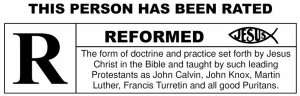
rated-rWhat is a creed? It is a testimony of the faith in God and the scriptures that defines “those things which are most surely believed among us.” as Christians. (Luke 1:1). It is simply says, “We believe” or, “I believe.” The Scriptures of the Old and New Testament are the Word of God and are the all-sufficient rule of faith and practice (2 Tim 3:16-17; 2 Peter 1:20-21). It is the only criterion of doctrine that has any power to insist people to believe and obey what it teaches. All other standards that a person subscribes to are of value or authority only as they teach what the Scriptures teach.


R.C. Sproul said that “creeds are distinguished from the Scripture in that Scripture is norma normans (“the rule that rules”) while the creeds are norma normata (“a rule that is ruled”).[i]  The wonderfully practical thing about creeds is that they summarize and give clarity to what we believe as Christians and they are important for the harmony of God’s people because they help us to unite around important issues. It is hard to have unity with others when you do not know what they believe. Creeds were intended to bring unity not division despite the fact that creedally challenged people today seem to think that they are divisive.  But men who made creeds and confessions studied the scriptures and considered it their duty to intellectually and logically construct a system of faith out of the materials presented in scriptures. When you can be specific and clear on what you and the church believe, unity becomes more cherished and unity must be based on truth, not the lowest common denominator. 


How can you fellowship with someone when you do not know what they believe? How can you ignore the teachings of the scripture for the sake of unity? Today the great sickness in the thought process of people is pluralism-the belief that all religious paths lead to acceptance with God. This is anti-Christ thinking and will only lead to religious slavery and eventually societal breakdown. Unity today is at best the setting aside of your beliefs for the “greater good” of soceity. But the Bible makes it clear that Jesus Christ and Christianity are the true religion and this cannot be compromised.


Many ministers egotistically teach that we have no creed but Christ. But the Bible asks, “What? Came the word of God out from you? Or came it unto you only?” (1 Cor 14:34). The men of God who hammered out and forged the creeds of the church should not be ignored or set aside by those who question their teaching just because it is seen in a creed. This erroneous attitude of non-creedalists is nothing new. It goes back to the time where the church in Corinth was having terrible disunity, “Now this I say, that every one of you saith, I am of Paul; and I of Apollos; and I of Cephas; and I of Christ.” (1 Cor. 1:12). I that group who do you think was the most problematic? Was it Paul’s group? Was it Peter’s denomination? I think not. It was that elitist congregation those who claimed that they exclusively belonged to Christ above their brethren that were the most dangerous.


I read somewhere that the real question is not about accepting the word of God over the creeds of men or placing the Creeds above the holy Scriptures but the issue is the tried and tested faith of the collective body of God’s people, versus the private opinion of the person or groups who object to creeds to make up or reinvent the church and their own beliefs. Creeds are an expression of beliefs that line up with scripture (orthodoxy) and are detailed in their phraseology to avoid beliefs that deviate from scripture (heresy).


The Article Seven of the Belgic Confession states this adamantly concerning scriptures and any other human writing, “For since it is forbidden to add to or subtract from the Word of God, this plainly demonstrates that the teaching is perfect and complete in all respects. Therefore we must not consider human writings– no matter how holy their authors may have been– equal to the divine writings; nor may we put custom, nor the majority, nor age, nor the passage of time or persons, nor councils, decrees, or official decisions above the truth of God, for truth is above everything else.


Creeds demonstrated how the church developed and became more sophisticated in their interpreting Scripture. It also serves to help discern pure doctrine and defend it from the distortion of heretics and the assault of unbelievers, and creates a unity of faith through teaching.  They also give us a syllabus in training our children and other Christians. They should manifest a convincing competent knowledge of the fundamental teachings of the Christian faith and live a life that glorifies and serves God.


Many people will say that they do not agree with the Greek and Roman forms of the church and that is why they do not accept Creeds. That is why we must test the Creeds in light of the scripture. I think the Second Helvetic Confession says it beautifully, “Wherefore we do not despise the interpretations of the holy Greek and Latin fathers, nor reject their disputations and treatises concerning sacred matters as far as they agree with the Scriptures; but we modestly dissent from them when they are found to set down things differing from, or altogether contrary to, the Scriptures. Neither do we think that we do them any wrong in this matter; seeing that they all, with one consent, will not have their writings equated with the canonical Scriptures, but command us to prove how far they agree or disagree with them, and to accept what is in agreement and to reject what is in disagreement.”


[i]Norma Normata A Rule that is Ruled Right Now Counts Forever By R.C. Sproul © 2008 Tabletalk Magazine